
Many drivers ask themselves when buying their next car: Do I really need all-wheel drive? After all, “more traction” and “better control” sound appealing – especially in Switzerland, where snow, steep roads and winding routes are common. But what’s the technology behind it, how exactly does AWD work, and when is it actually worth the investment?
Types of drive systems – front, rear and all-wheel drive
Front-wheel drive:
Most modern cars are powered by the front wheels. This saves weight, space and fuel – ideal for everyday use, city driving and long motorway journeys. However, on wet or snowy roads, front-wheel drive can reach its limits sooner, as the driving power acts only on the front wheels.
Rear-wheel drive:
Here, the rear wheels provide the drive. This setup offers a well-balanced weight distribution and dynamic handling – perfect for cornering enthusiasts. On slippery surfaces, however, rear-wheel drive offers less traction, as the driven wheels are not the ones used for steering.
All-wheel drive (4x4):
With all-wheel drive, all four wheels are powered – either permanently or variably. This provides better grip, especially on snow, ice, wet grass or gravel. Modern systems automatically distribute power between the front and rear axle, depending on where more traction is needed.
How does all-wheel drive actually work?
There are two main principles:
Permanent all-wheel drive:
All four wheels are driven at all times. A so-called centre differential ensures that the axles can rotate at different speeds when cornering. Advantage: maximum traction at all times. Disadvantage: slightly higher weight and fuel consumption.
Selectable all-wheel drive:
Here, the car runs in two-wheel drive under normal conditions (usually front). Only when needed – for example, when the front wheels start to slip – is the second axle automatically engaged. This saves energy but still delivers AWD power when required.
Some modern systems, especially in electric cars, use a so-called dual-motor system with one motor per axle. This electric solution works extremely quickly and efficiently, as the power distribution is electronically controlled – without mechanical losses.
Advantages and disadvantages of all-wheel drive
Advantages:
Better traction on snow, ice and loose ground
Safer hill starts
Greater stability when towing or driving on unpaved roads
Improved handling and cornering performance (especially in sporty models)
Disadvantages:
Higher purchase price
Slightly increased weight and fuel consumption
More expensive maintenance due to the added complexity
All-wheel drive in everyday life – when is it really worth it?
Not everyone needs all-wheel drive – but once you’ve had it, you often won’t want to go without it.
AWD is particularly useful if you:
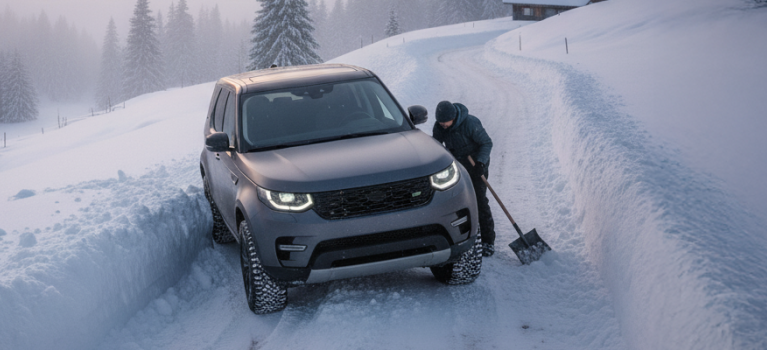
frequently drive in the mountains or on snowy roads
use your car for towing a trailer
regularly travel on unpaved roads or gravel
prefer an electric car with two motors (dual motor) – here, AWD not only improves traction but also boosts performance
It’s less necessary if you mainly drive in towns or on motorways and rarely encounter slippery conditions. In those cases, good winter tyres often make more of a difference than AWD alone. No matter how advanced the system is – without proper tyres, even the best all-wheel drive won’t help much. The right combination of tyres and drive system is what truly ensures safety and traction.
Conclusion: All-wheel drive is more than just a winter feature
All-wheel drive offers extra safety, control and confidence, especially in challenging conditions. For those who mainly drive on flat roads, it’s often a “nice-to-have” – but for anyone living in mountainous regions, frequently towing trailers or enjoying off-road trips, it’s a real safety and comfort advantage.
At Carvolution, you’ll find a wide range of modern all-wheel-drive cars – from efficient SUVs to electric dual-motor models. So you can stay safe and relaxed all year round.
Sale
Benefit from attractive discounts on selected vehicles. Everything is included in the subscription, and a buyout is possible at the end!