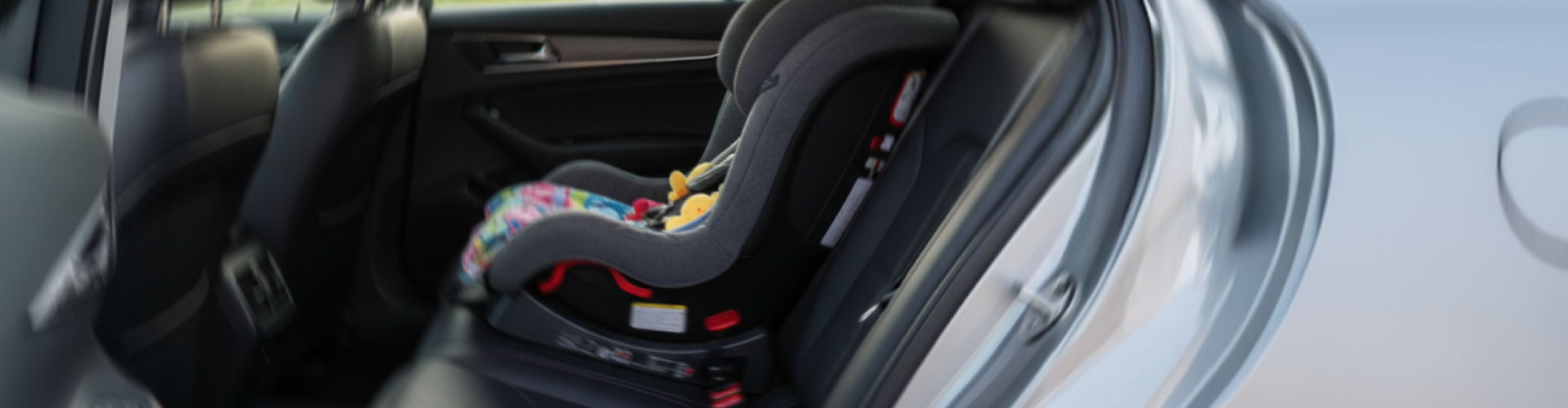
The safety of children in a car is the top priority – but when it comes to child car seats, many parents feel uncertain. What are the rules in Switzerland, and which mistakes are most common? Isofix, rear-facing seats, infant carriers or belt-fitted seats – which is best? This guide gives you a clear overview and practical tips to ensure your child is always safe on the road.
Swiss regulations for child car seats
In Switzerland:
Children under 12 years and shorter than 150 cm must use an appropriate child car seat.
The seat must comply with European standards (ECE R44/04 or i-Size R129).
Rear-facing seats may only be used on the front passenger seat if the airbag is deactivated.
👉 Breaches can result in fines – and, more importantly, put your child’s safety at serious risk.
Common mistakes with child car seats
Seat not installed firmly enough
Belts too loose or incorrectly routed
Wrong seat for the child’s size or weight
Children too early without a seat or only on a booster cushion
Rear-facing seat used with an active passenger airbag
Isofix explained: What it is and how it works
Isofix is an internationally standardised system for securing child car seats. The seat is connected directly to fixed anchorage points on the car’s frame – without the seat belt.
Advantages of Isofix:
Easy and quick installation
Lower risk of incorrect fitting
Very stable connection, especially in a collision
Many cars also have a top tether or support leg to make the seat even more secure.
Alternative belt installation
Not every car and not every seat has Isofix. Alternatively, the child car seat can be secured with the standard 3-point seat belt.
Important:
The belt must sit tight and must not be twisted.
The seat must not move significantly after installation.
👉 Both systems – Isofix and seat belt – are safe when used correctly.
Child seat groups: By age, weight and height
Child car seats are divided into different groups, traditionally by weight – nowadays also by height (i-Size):
Infant carrier (up to approx. 13 kg / 40–85 cm): rear-facing, for newborns.
Toddler seat (up to approx. 18 kg / 100 cm): forward- or rear-facing, depending on age and seat model.
High-back booster seat (up to approx. 36 kg / 150 cm): forward-facing, with belt guides for the seat belt.
It is recommended to keep children rear-facing (in so-called “extended rear-facing seats”) for as long as possible, as this greatly reduces the strain on the neck in a crash.
Practical tips for child car seats
Before buying:
Check whether the seat fits in your car (Isofix anchors, space, recline angle).
Take your child along and try it out – not every seat fits every child equally well.
Installation:
Always follow the manufacturer’s instructions (Isofix or belt installation).
Ensure the seat is stable and secure (no more than 2 cm of movement).
Everyday use:
Always buckle your child in correctly → observe belt routing, tighten straps, avoid thick jackets.
Regularly check seat position (e.g. recline, headrest).
Take breaks on longer journeys – even the best seat will become uncomfortable.
Conclusion: Safety comes first
Child car seats are not only a legal requirement – they are essential for your child’s safety. Whether with Isofix or seat belt, the key is correct use and choosing a seat that matches your child’s size and age.
👉 Since November 2014, Isofix has been mandatory in the EU for all newly registered cars with more than one row of seats. The good news: with Carvolution you always drive brand-new cars – all equipped with Isofix.
Sale
Benefit from attractive discounts on selected vehicles. Everything is included in the subscription, and a buyout is possible at the end!