Swiss roads are becoming increasingly electric. Despite a slight decline in the new car market in 2025, the share of electric cars stabilised at over 20%. 2026 promises exciting electric car trends: from the continued popularity of electric SUVs and small cars, to growing price pressure from Chinese and European competitors, and further developments in charging infrastructure. Find out what these trends look like – and why the Carvolution car subscription is a compelling answer to many of today’s challenges.
The future drives electric: stabilisation at a high level
The Swiss new car market faced several challenges in 2025. While the overall passenger car market shrank slightly (-3.9% up to Q3 2025), electric mobility continued to gain ground.
The share of fully electric cars (BEVs) stabilised again at over 20% (Q3 2025: 21.1%), following a small dip the year before. Including plug-in hybrids (PHEVs), almost every third newly registered car in Switzerland now has a plug.
The Swiss government’s Roadmap for Electric Mobility remains ambitious for 2026. Although the target of 50% plug-in cars by the end of 2025 was narrowly missed, the focus is clearly on the third expansion phase: further promoting electric cars and ensuring a stable power supply. With the introduction of Legislative Package 2 on 1 January 2026, growth in electric mobility in Switzerland is set to accelerate further.
Electric car trend 2026 No. 1: Electric SUVs remain strong – small cars are catching up
The SUV segment will remain a key pillar of the electric car market in 2026. Although the Tesla Model Y is still one of the best-selling electric cars in Switzerland, it is clearly losing market share. At the same time, the VW Group – with brands such as Škoda, Audi and VW – has gained significant ground and became the largest electric car brand group in Switzerland in 2025.
However, the real growth driver for 2026 is likely to be affordable small and compact cars. New models such as the Citroën ë-C3 Max, Fiat 500e La Prima and Peugeot E-208 focus strongly on cost, lowering the entry barrier and making electric mobility attractive to a broader audience.
The trend is clear: while electric SUVs remain popular, compact and affordable models are making the switch to electric power more practical and accessible for everyday use.
Electric car trend 2026 No. 2: Price pressure and a lack of purchase incentives
Although Switzerland does not offer direct financial incentives for electric cars, increasing competition is driving prices down – a trend that makes entering electric mobility easier, for example through a car subscription.
1. Intense global competition and rising price pressure
Competition in the electric car market has reached a new level, driven by a “second wave” of new models:
Aggressive new players: Chinese manufacturers such as BYD and Leapmotor are becoming increasingly established in Europe and Switzerland. They offer technologically advanced, often aggressively priced cars in the compact and premium segments, competing directly with established European brands. This increases pressure on prices and margins across the market.
European small & compact offensive: At the same time, European manufacturers are launching much-needed affordable small and compact cars, such as the Citroën ë-C3 Max, Fiat 500e La Prima and Peugeot E-208.
Result: accelerated depreciation. Due to fierce competition and rapid innovation cycles (for example new 800-volt architectures), older electric car models lose value faster than comparable combustion-engine cars. For buyers, this creates a noticeable financial risk.
Car subscriptions are an ideal solution here: they allow you to try electric cars without worrying about residual value. All fixed costs are included, with the monthly rate covering insurance, maintenance and taxes.
2. Lack of national purchase incentives and rising costs
Unlike many European countries that offer direct purchase subsidies (such as France), Switzerland provides very limited financial support for electric cars at federal level. This has several consequences:
High entry barrier: Electric cars are more expensive than combustion-engine cars, and without government subsidies the switch is particularly difficult for lower-income households.
Political framework: The abolition of the import tax exemption for electric cars (since 2024) and the ongoing discussion about a replacement levy (planned from 2030) further increase uncertainty for buyers.
Result: reduced market momentum among private buyers. Without purchase incentives, financial hurdles rise, especially for middle-income households. Many potential buyers delay the switch to electric cars or opt for used models, slowing the spread of new technologies.
Car subscriptions offer an attractive alternative: they allow you to use an electric car without high upfront costs. In addition, total costs are guaranteed to be lower than with leasing.
Electric car trend 2026 No. 3: Charging infrastructure – a central but manageable challenge
At first glance, the situation looks promising. With over 16,000 public charging points (as of May 2025), Switzerland has one of the densest charging networks in Europe. For many electric car drivers, however, this is only part of the solution.
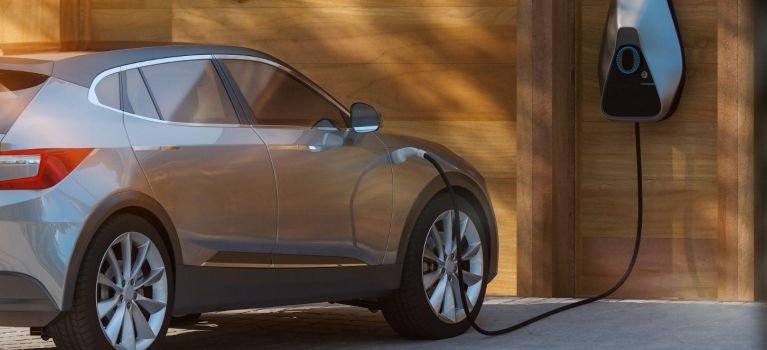
The real challenge is charging at home. Anyone who cannot charge their car overnight at their place of residence must rely on public or semi-public charging points. With some planning, this is feasible, but it can be more time-consuming and expensive. Tenants and residents of apartment buildings are particularly affected, as installing private charging points is often more complex.
Fortunately, there are cantonal and municipal support programmes, for example in Basel or Thurgau, which help facilitate retrofitting parking spaces. With a bit of organisation, these hurdles can be overcome.
Conclusion: the issue is not the number of public charging points, but access to private charging. Those who plan their charging strategy can easily integrate an electric car into everyday life. Charging infrastructure remains a challenge – but one that can be solved.
How will electric car trends 2026 affect Carvolution?
Many people are still hesitant about switching to electric cars. Uncertainty around technology, residual value and incentives holds them back – with Carvolution, the transition is simple and worry-free.
This is where the car subscription becomes particularly attractive:
Risk reduction: At the end of the subscription term, you simply return the car without worrying about depreciation.
Full cost control: All key costs related to the car – insurance, tyres, maintenance, taxes and depreciation – are included in the fixed monthly price.
At Carvolution, almost half of the range already consists of fully electric or plug-in hybrid cars, and this share is growing rapidly.
Electric cars at Carvolution in 2026
In 2026, Carvolution will focus even more on affordable models to meet growing demand in the small and compact segments.
Currently available models – be quick, many sell out fast:
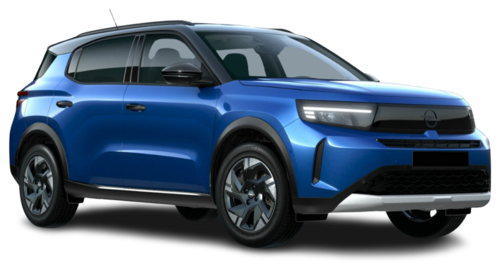
OpelFrontera-e GS
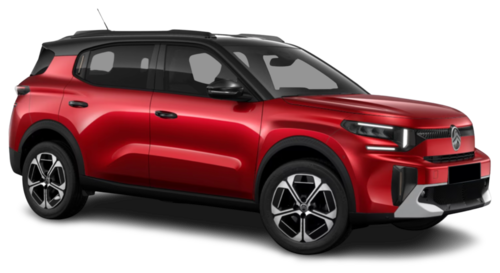
Citroënë-C3 Aircross MAX
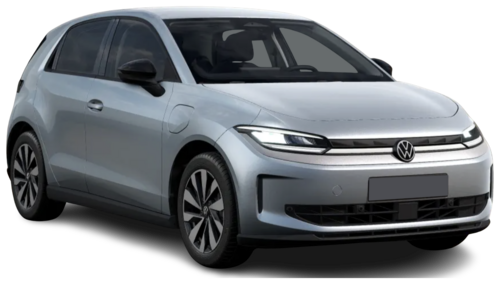
VWID. Polo Life
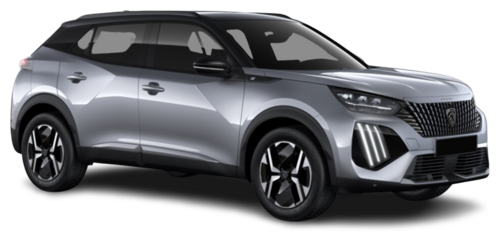
Peugeote-2008 GT
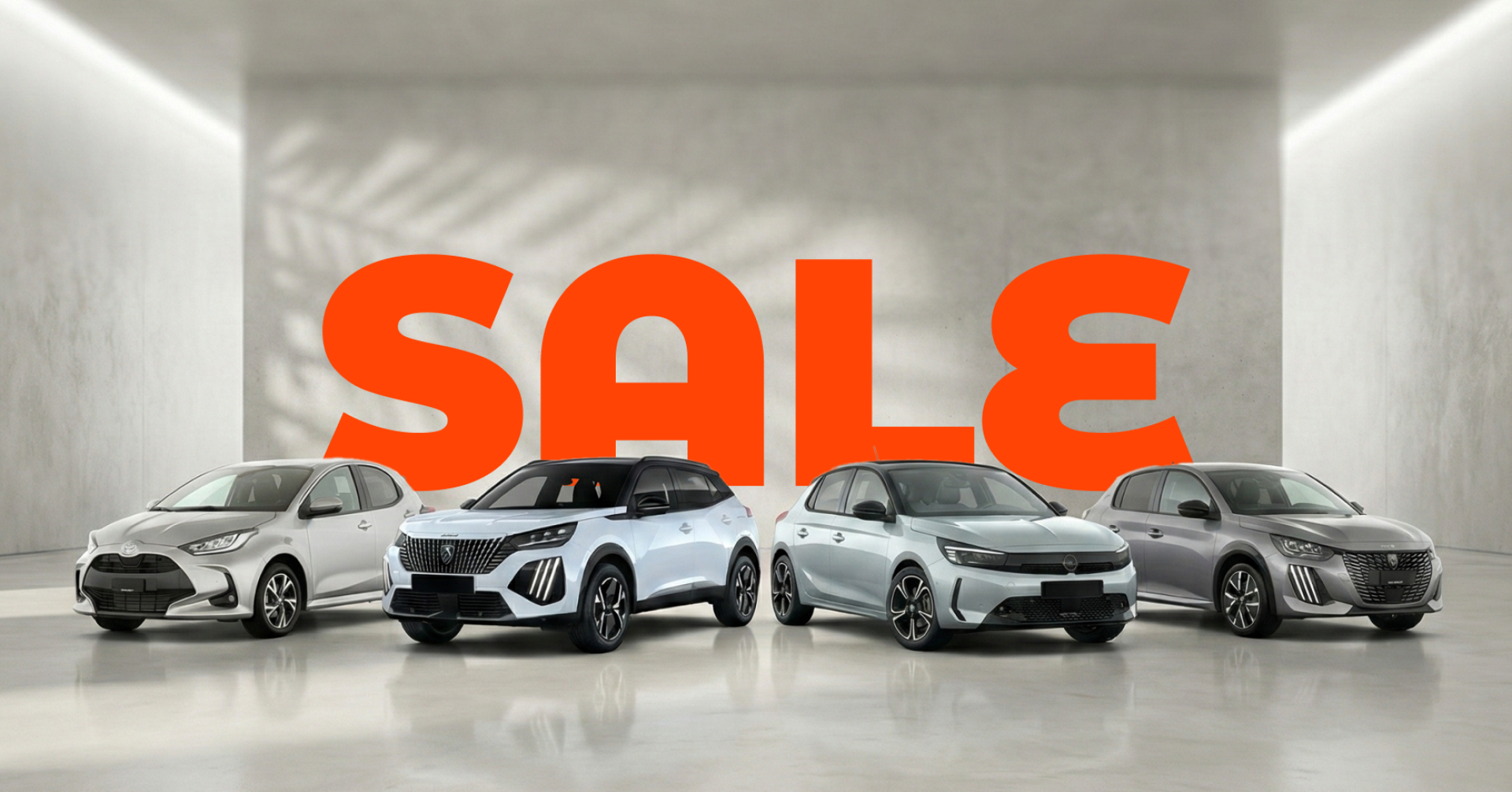
Sale
Benefit from attractive discounts on selected vehicles. Everything is included in the subscription, and a buyout is possible at the end!