- What does it cost to rent a car for three months in Switzerland?
- Where can I find the cheapest rental cars in Switzerland?
- Renting a car in Switzerland without a credit card – is it possible?
- Long-term rental cars: which models are available in Switzerland?
- Long-term car rental with mileage packages
- Everything included: what is in the long-term rental price?
- Special cases in long-term rental: tow bar & international travel
- Requirements for rental cars in Switzerland
- Conclusion: why a car subscription is the smartest choice for 3 months (and longer)
Whether for an extended road trip, as a transitional solution, or for your daily commute: anyone needing a car for three months in Switzerland faces an important decision. The costs between traditional rental car providers and modern long-term rental models often differ significantly over this period—sometimes by several thousand francs in savings. However, beyond price, factors such as insurance coverage, mileage flexibility, and the choice of exact desired model also play a crucial role. In this article, you will learn why a detailed comparison is worthwhile and how the right choice can save you not only money but also stress.
What does it cost to rent a car for three months in Switzerland?
If you need a car for a limited period, the question quickly arises: what is the most sensible option? Should you go to a traditional rental provider, or is a long-term rental the better choice?
To make this decision easier, it is worth looking at the details, because especially when renting a car for 3 months, costs can vary massively depending on the rental model chosen.
Both in long-term rental and with traditional providers, the most important services are usually included:
Comprehensive, liability, and parking damage insurance (deductible approx. 950 CHF to 1.000 CHF)
Registration and taxes in your home canton
Complete tyres (including change, storage, and new tyres)
All servicing and maintenance
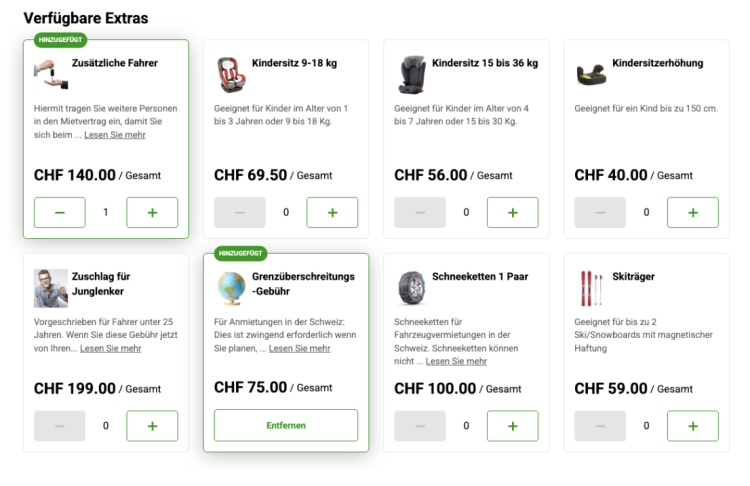
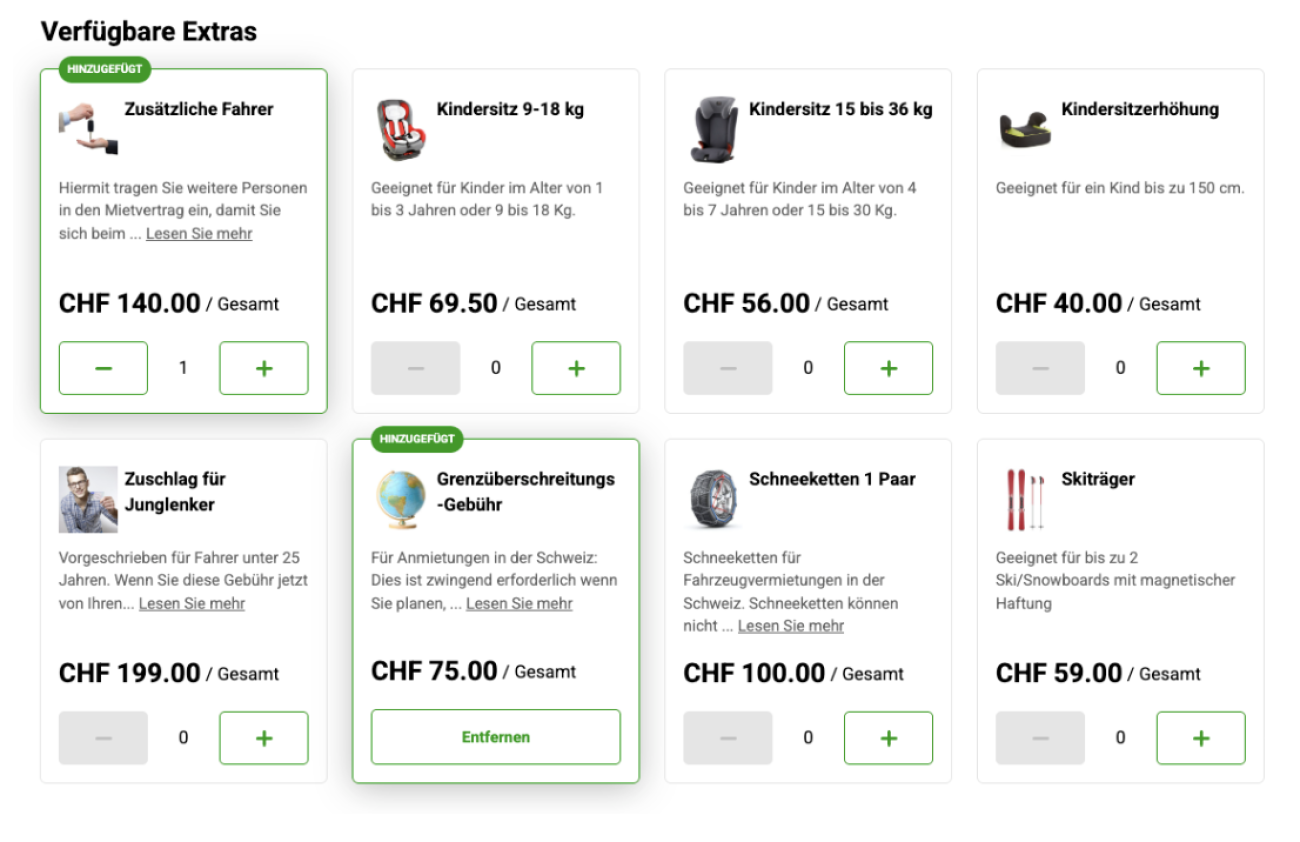
Trips abroad and two drivers (in long-term rental, even unlimited drivers are included)
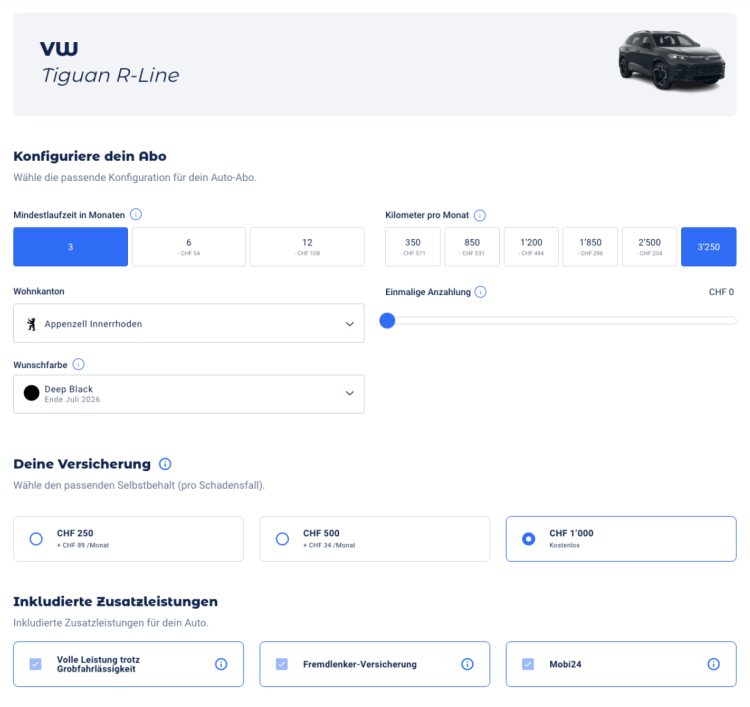
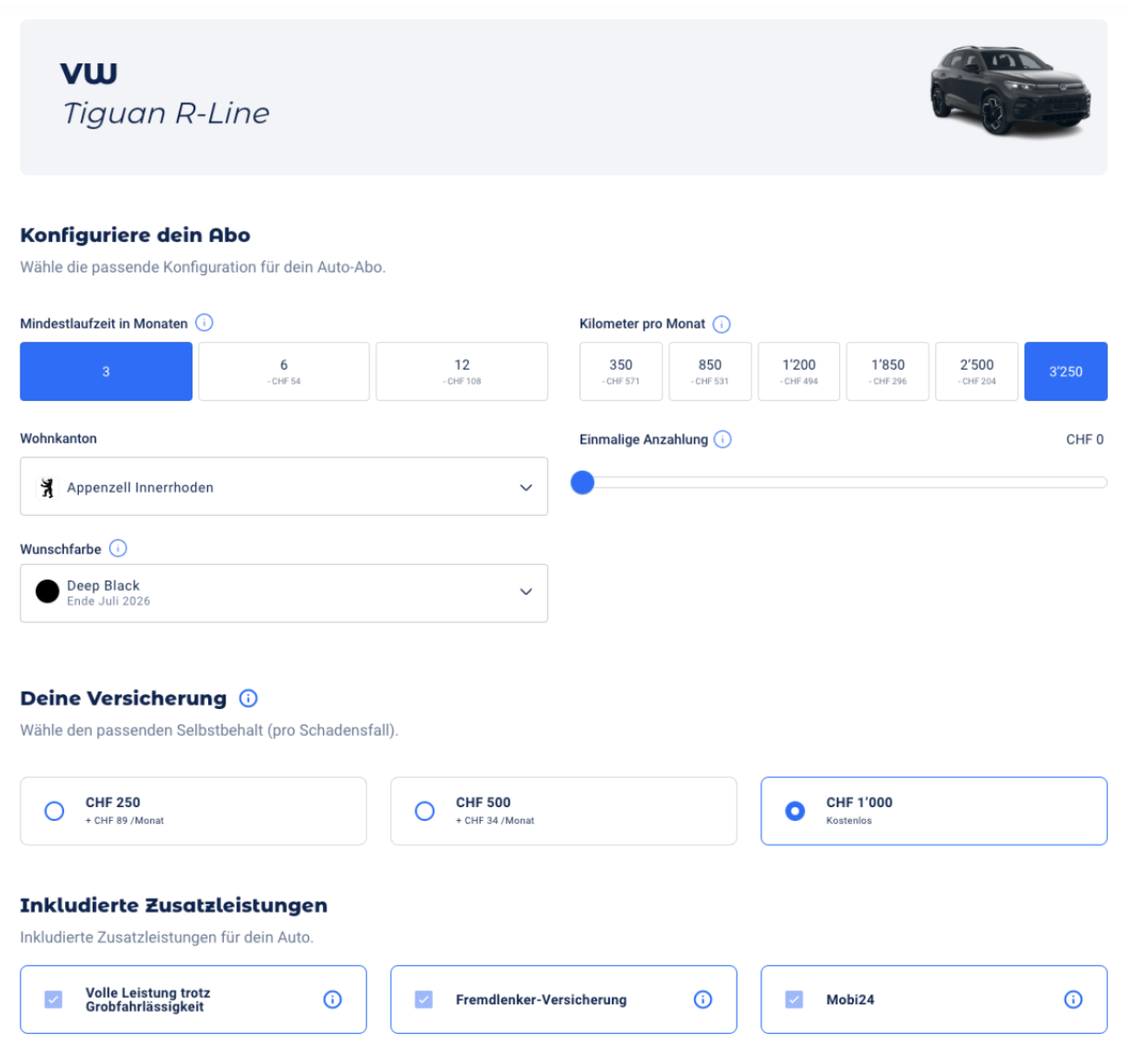
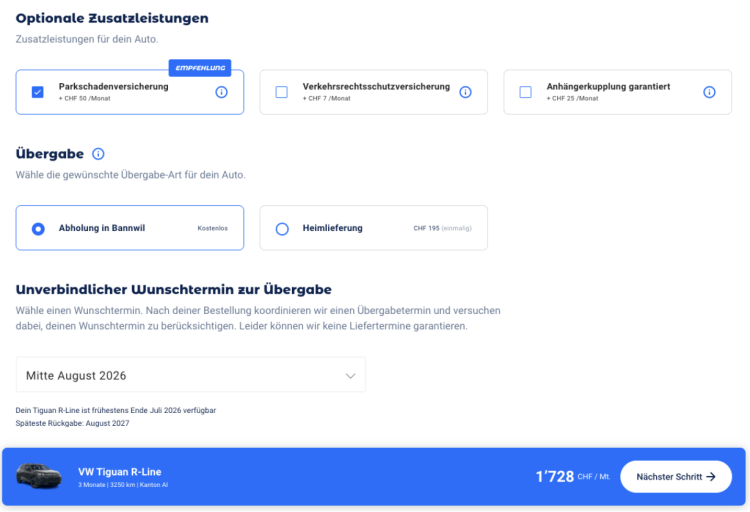
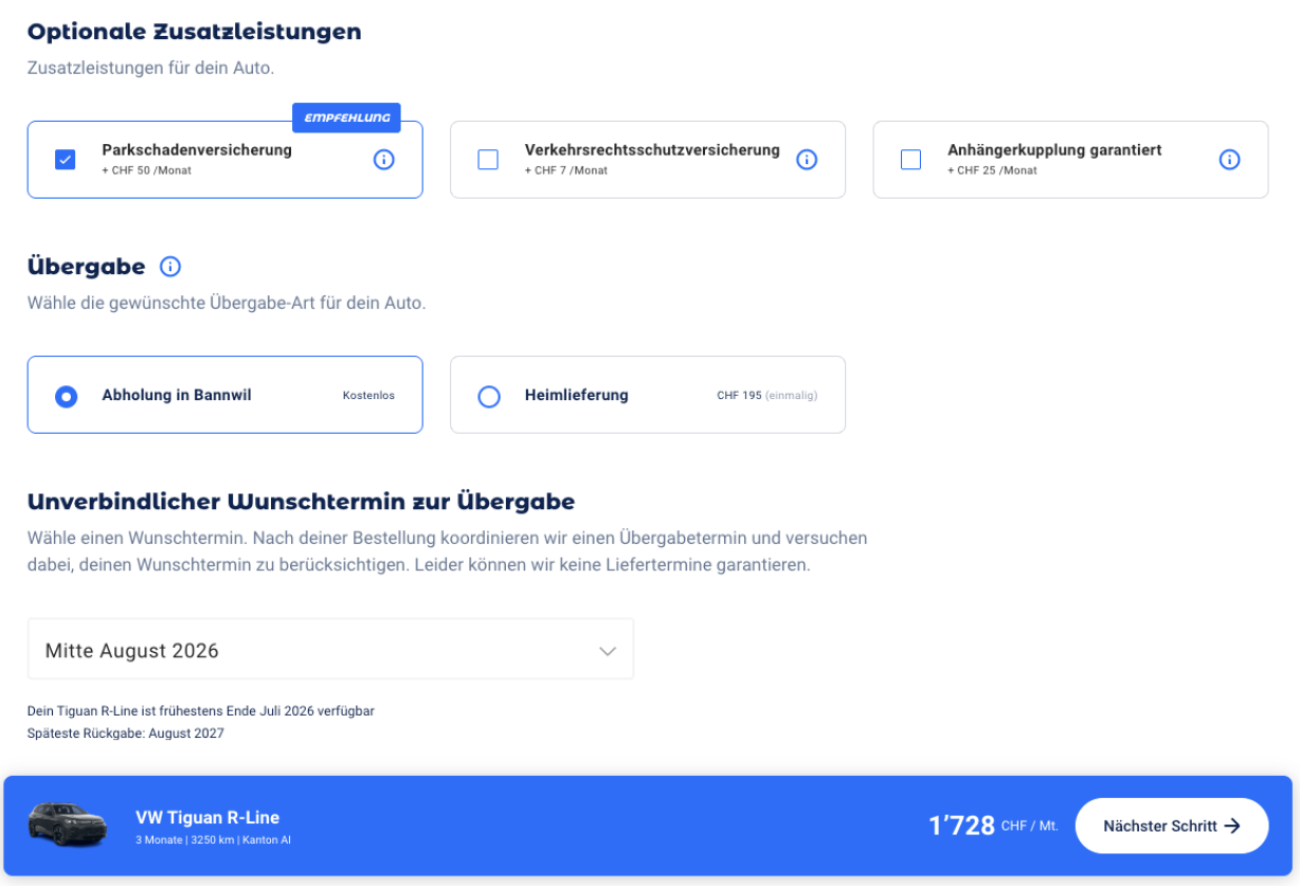
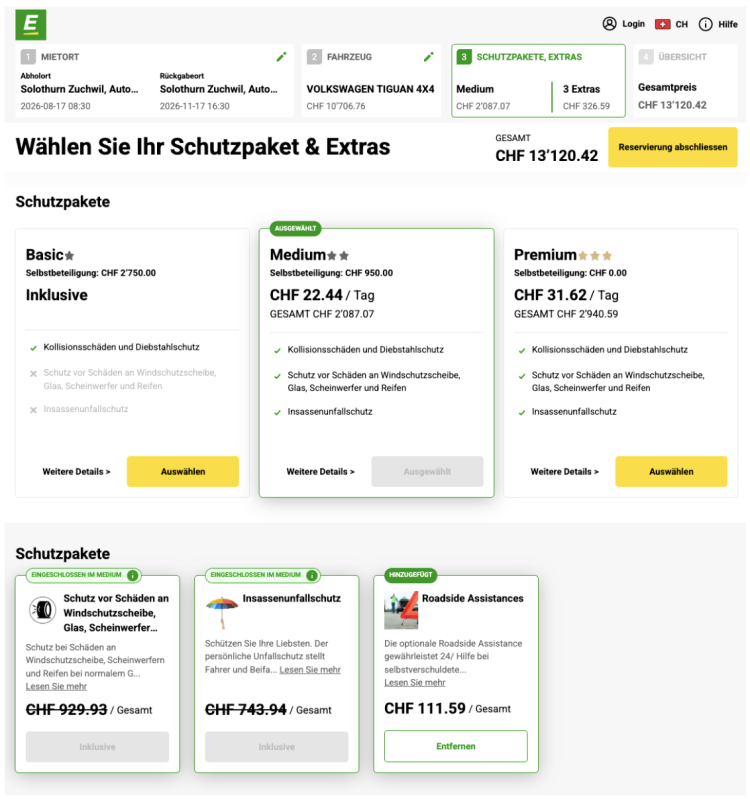
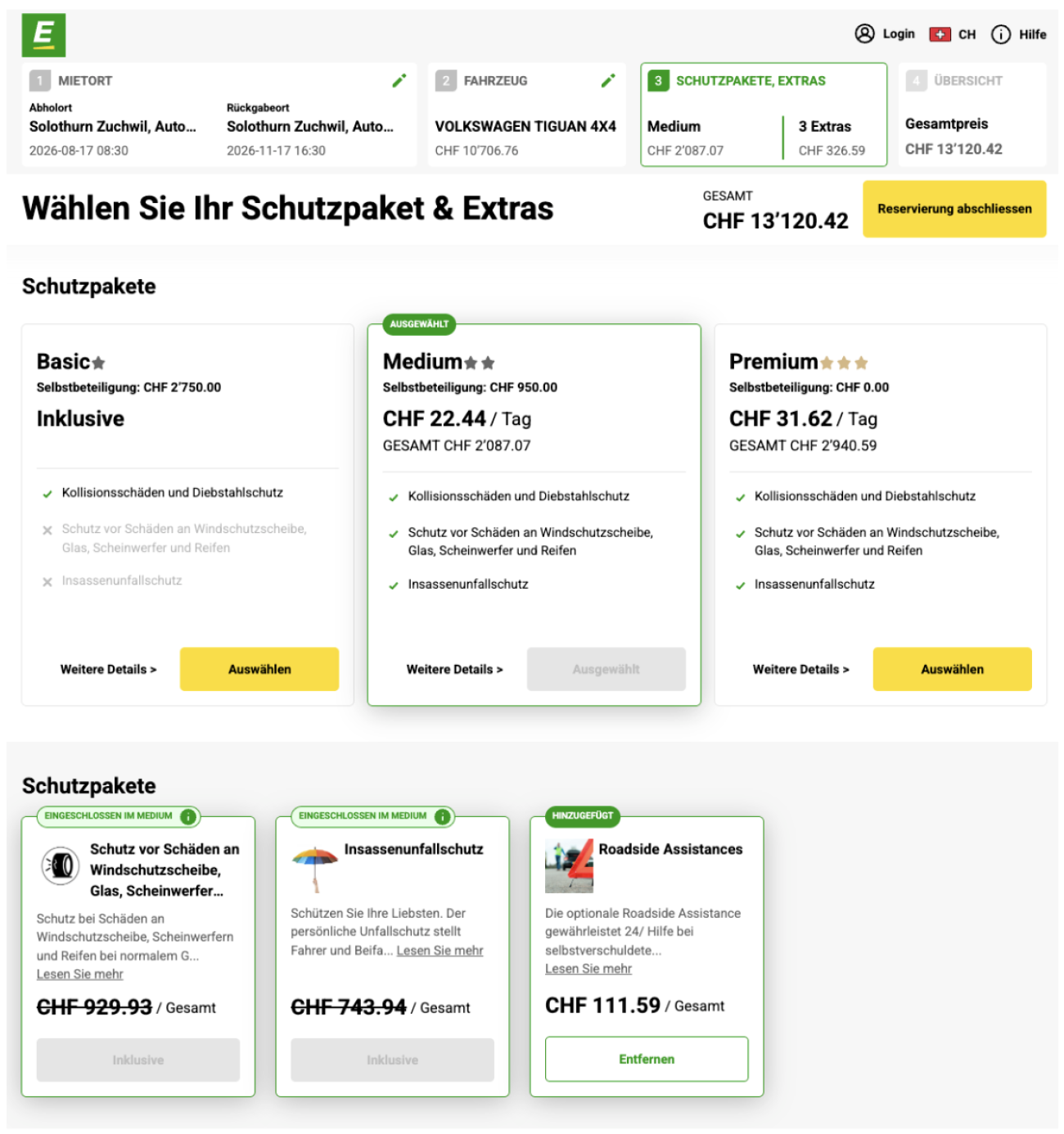
Assumptions:
Car: VW Tiguan
Including additional driver (both over 26 years old)
Rental period (mid-August to November)
3,100–3,250 km/month
(20 April 2025 )
(20 April 2025 )
As this comparison shows, the savings with a long-term rental are enormous at around 8000 CHF. An overview of other options for using a car for a short time can be found here.
Why traditional rental is often more expensive
Traditional rental cars are designed for short-term use and are ideal for a few days or weeks. However, once you want to rent a car long-term in Switzerland, whether for a quarter or even a car rental for six months in Switzerland, the daily rates of rental companies quickly drive up costs.
Long-term rental, on the other hand, is designed exactly for these time periods and is based on fixed monthly prices. The question “How expensive is renting a car?” is almost answered by itself: anyone planning for more than a few weeks will benefit most from a long-term rental.
Where can I find the cheapest rental cars in Switzerland?
If you are looking for the cheapest way to drive a car, traditional rental cars are often subject to seasonal price fluctuations. Especially during holiday periods, prices rise sharply. However, anyone needing a car for several months or years often does not compare long-term rental with a nearby rental car, but rather with traditional leasing.
Many believe that leasing is the cheapest way to use a car long-term. However, we are convinced: with Carvolution, you always drive at the best price compared to the total cost of leasing—and we guarantee it.
Best price guarantee: the honest comparison
Why do we compare ourselves with leasing? Quite simply: leasing rates often appear very cheap at first glance. However, this is misleading, as costs for insurance, taxes, and servicing are added separately.
If you want to rent a car long-term, Carvolution ensures you do not overpay. If you find the same car with identical specifications and the same list price cheaper with another Swiss leasing provider when all costs are included, we will match the price. We compare not only the leasing rate but the total cost of ownership.
Renting a car in Switzerland without a credit card – is it possible?
Unlike many traditional rental companies, Carvolution gives you full flexibility when choosing your payment method. You can easily pay for your car in the following ways:
Payment by invoice: You can conveniently settle the amount via online banking.
Renting a car with a debit card: Many customers now use debit cards (such as Visa Debit or Debit Mastercard) – however, only if the payment is made online to cover the monthly fixed costs.
Credit card: Of course, the credit card remains an option if you prefer to use one.
Why is it so simple?
Since long-term rental is based on a monthly billing model, the administrative requirement for a credit card—common with traditional rental companies—no longer applies. This makes it particularly easy, straightforward, and affordable for people who choose not to use credit cards.
You enjoy all the benefits of your own vehicle without the bureaucratic hurdles of the traditional car rental world. Simply get in, drive, and handle the payment in whatever way suits you best.
This makes Carvolution the ideal solution for anyone who prefers renting a car with a debit card or by invoice over the offers of traditional providers.
Long-term rental cars: which models are available in Switzerland?
Anyone who needs a car for a longer period of time wants to know exactly what they are signing up for. However, when searching for the right vehicle, there is a crucial difference between the traditional car rental market and long-term rental.
Vehicle class vs. chosen model
With traditional car rental, you usually book a so-called vehicle class online. For example, you reserve the SUV class, such as a VW Tiguan or similar. The problem is that you have no guarantee of receiving a specific model. On the day of collection, you only find out which car is actually available — it might be the desired Tiguan, but it could just as easily be a completely different model from another manufacturer within the same category.
In contrast, with long-term rental, you benefit from complete planning certainty. You choose your exact preferred model on the Carvolution vehicle page, including the desired specification. If you are looking for a VW Tiguan, then you will receive exactly that — including the colour, engine type, and technical features shown in the images.
Here you can explore our vehicles and select the perfect model for your needs.
Long-term car rental with mileage packages
Anyone who needs a car for a longer period of time is often faced with the challenge of estimating mileage accurately in advance. With traditional rental providers, this can quickly become a limitation that ends up being costly.
Fixed limits vs. actual needs
With conventional car rental companies, mileage limits are usually fixed. The problem is twofold: if you drive more than agreed, you often pay high charges for every extra mile at the end of the contract. If you drive less, the money paid for unused miles is simply lost. In most traditional agreements, there is no refund or adjustment available.
Full flexibility during the rental period
Modern long-term rental breaks away from these rigid rules. Here, you enjoy full flexibility – even while you are already using the car. You can easily adjust your mileage package via an app.
If you drive more than expected, you can simply increase your package with just a few clicks, avoiding expensive end-of-contract charges.
If your commute becomes shorter, you can reduce your mileage so you are not paying for a service you no longer need.
This means that with long-term rental, you only ever pay for what you actually use.
Everything included: what is in the long-term rental price?
With long-term rental, you benefit from a true all-in-one package at a fixed monthly price, with no hidden costs. In contrast, traditional short-term car rental is often far less transparent: high excess fees of up to CHF 2,000 are standard unless you take out expensive additional insurance packages. Services such as additional drivers or international cover usually also come at an extra cost.
Special cases in long-term rental: tow bar & international travel
In addition to standard requirements, there are often specific needs that are difficult to fulfil with traditional car rental providers. For example, anyone looking to rent a car with a tow bar in Switzerland often faces a problem: at many rental stations, a tow hitch (AHK) is rarely guaranteed and remains a matter of luck. With long-term rental, however, you can specifically choose a model equipped with a tow bar – ideal if you want to mount a bike rack or tow a trailer.
This model also offers clear advantages for international travel. Anyone looking to rent a car in Switzerland for use abroad benefits from full freedom with long-term rental. While short-term rentals often involve high additional fees or strict restrictions when driving from Switzerland into other countries, trips to neighbouring countries are usually straightforward here. This allows you to handle these special requirements with ease and full planning certainty.
Requirements for rental cars in Switzerland
1. Documents & driving experience
Short-term rental: Traditional car rental companies almost always require that you have held your driving licence for at least one year. In addition, you must present a valid ID card or passport in original form when collecting the vehicle.
Long-term rental: Getting started is significantly easier here. With providers such as Carvolution, you do not need to have held your driving licence for a full year – a valid Swiss Category B driving licence is sufficient. If you hold a foreign licence, it will be checked whether it is valid on Swiss roads.
For signing the contract, you will need one of the following documents:
Swiss passport or ID card
Residence permit C, B or L
A legitimation card
2. Finance: credit card vs. credit check
Short-term rental: A credit card is almost always required to block the security deposit. Debit cards are often rejected at the counter.
Long-term rental: A permanent residence in Switzerland and a positive credit check are mandatory. If there are outstanding debt enforcement records, an application may unfortunately be rejected. However, the classic credit card deposit is no longer required. Billing is handled conveniently via your preferred payment method, such as credit card, debit card, or e-banking.
3. Registration & regional aspects
Short-term rental: A Swiss residence is not required (ideal for tourists). Vehicles usually have neutral number plates (e.g. AI, AR or ZH).
Long-term rental: A Swiss residence is mandatory. In return, you benefit from registration in your home canton, including local number plates and already paid cantonal taxes.
From what age can you rent a car in Switzerland?
Age limits and fee traps
Anyone looking to rent a car from age 18 in Switzerland often encounters two major challenges with short-term rental companies.
First, almost all providers charge an additional daily “young driver fee” for drivers under 25. Second, it is practically impossible to rent a car immediately after passing the driving test, as most companies require a licence that has been held for at least one year. This means that even at 18, you often have to wait until 19 before you can legally drive a rental car.
The fair alternative for young adults
With long-term rental, things are much more flexible and enable real mobility from day one:
Car rental from 18 – no waiting period: With Carvolution, you can already receive a vehicle at 18 years of age through a long-term rental model. The key advantage is that you do not need to have held your driving licence for a full year. Once you pass your test, you can immediately get into your own car.
Cost advantage: While traditional rental companies often charge a surcharge until the age of 25, this is frequently reduced or removed much earlier in long-term rental (e.g. from age 23).
Conclusion: why a car subscription is the smartest choice for 3 months (and longer)
Anyone needing mobility for three months or more quickly reaches financial and organisational limits with traditional short-term rental. The comparison is clear: a car subscription (long-term rental) is not just an alternative, but in most cases the objectively better solution.
Significant cost savings: As shown with the VW Tiguan example, savings of over CHF 8,000 over three months are possible.
Maximum transparency: The all-inclusive package covers insurance, taxes, maintenance and tyres – with no hidden costs or administrative hurdles.
Planning certainty: You drive exactly the model you selected, while remaining flexible in terms of payment and mileage.
Were we able to convince you? Then you can explore our vehicles or arrange a non-binding consultation straight away.