- 1. How to park correctly: forwards, backwards & parallel
- 2. Public parking, blue, white and yellow zones explained
- 3. Car parks & apps: how to find the next free space
- 4. Parking with electric cars – what to know
- 5. Avoiding parking fines: common mistakes
- 6. Conclusion: stress-free parking with Carvolution
Parking is part of driving, just like using the indicator when turning – and yet it still causes stress time and again. Whether forwards, backwards or parallel: with the right tips, it becomes easy.
We’ll show you step by step how to park forwards, backwards and parallel, explain the different parking zones in Switzerland, and introduce apps that help you find free spaces. There are also special rules for electric cars – we’ll explain what to watch out for. That way, you’ll save time, nerves and avoid unnecessary fines.
1. How to park correctly: forwards, backwards & parallel
Forwards (angled) parking – quick and easy
Forward parking is especially popular in supermarket or multi-storey car parks: you can see the space clearly and simply drive in. However, getting the steering angle and spacing right takes some practice.
Step-by-step guide:
Indicate to the right.
Keep enough distance: the side gap to the right should be at least 2.5 metres. If the road is narrow, move as far left as possible (you may use the opposite lane only if absolutely necessary – always check for oncoming traffic!).
Check traffic behind you: use mirrors and do a shoulder check on both sides to make sure no other car or pedestrian is in danger.
Steer and enter: drive forward until your right-hand mirror is level with the right boundary line of the space. Only then turn the wheel to the right and slowly drive into the space. This prevents you from turning too early and missing the angle.
Align parallel: as soon as your car is straight between the cars on either side, stop and straighten the wheels.
Move fully into position until you’re centred within the lines.
Check spacing: if you’re too close to another car, reverse straight out a little, adjust the steering slightly and correct.
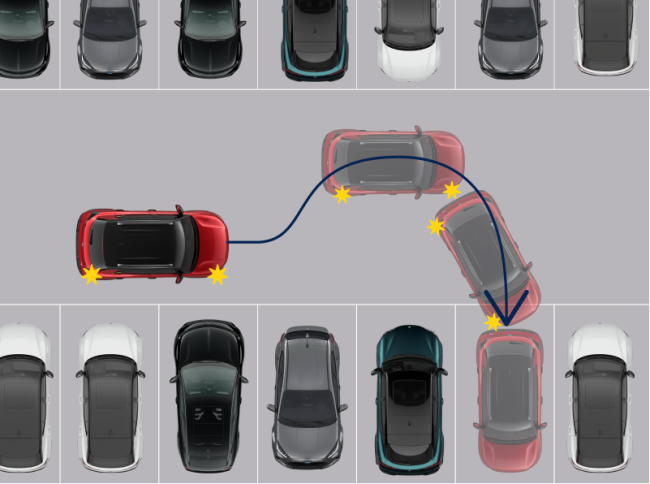
💡 Tip: Forward parking is convenient – but when leaving the space, visibility can be limited. If you have a choice, reversing into a space is usually safer and more practical.
Forwards (parallel) parking – precise and space-saving
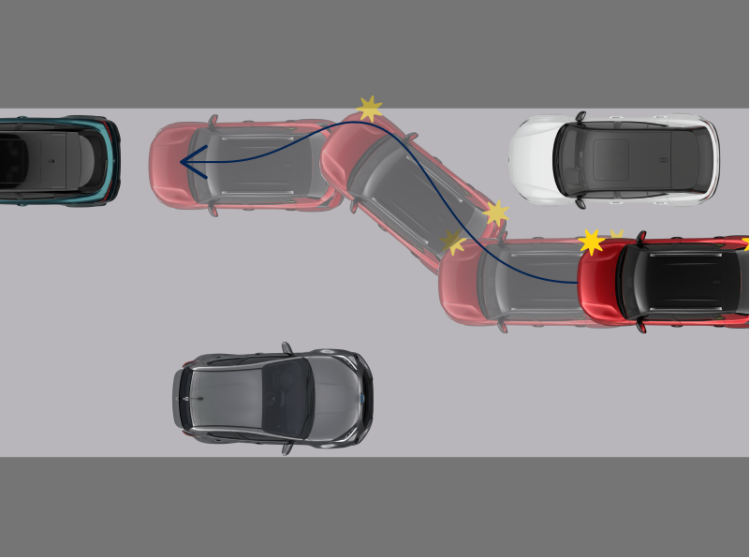
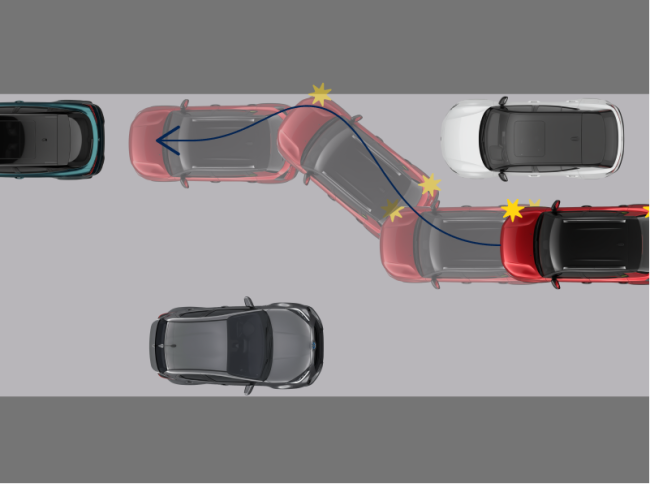
Sometimes parking spaces are parallel to the kerb, for instance along streets or at roadside bays. This requires a good sense of your car’s dimensions.
How to do it:
Indicate right.
Check traffic behind using mirrors and shoulder glance.
Don’t turn too early: only steer when you’ve passed the last car before the space. Turning too soon might cause your rear to scrape the parked car.
Drive in slowly, aiming for about a 45° angle to the kerb.
When the front of your car nears the kerb, turn the wheel the other way so the car straightens within the space. Then move forward until you’re centred.
Check the distance to the kerb and adjust if needed.
Reverse (angled) parking – safe and clear
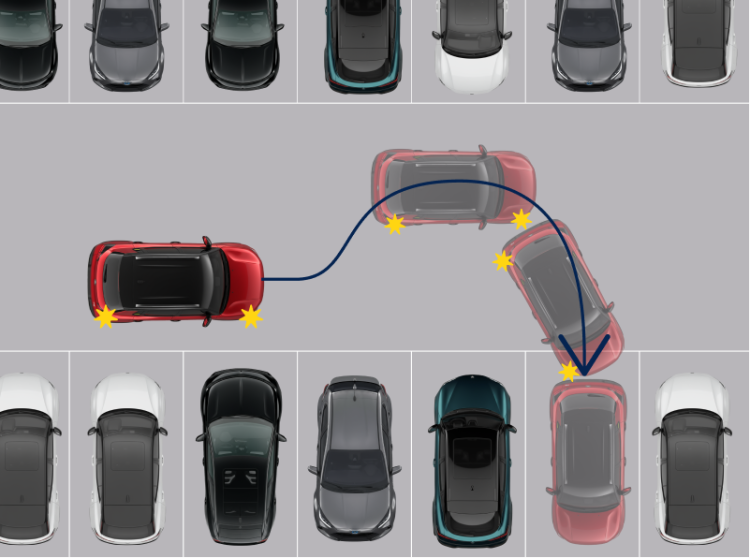
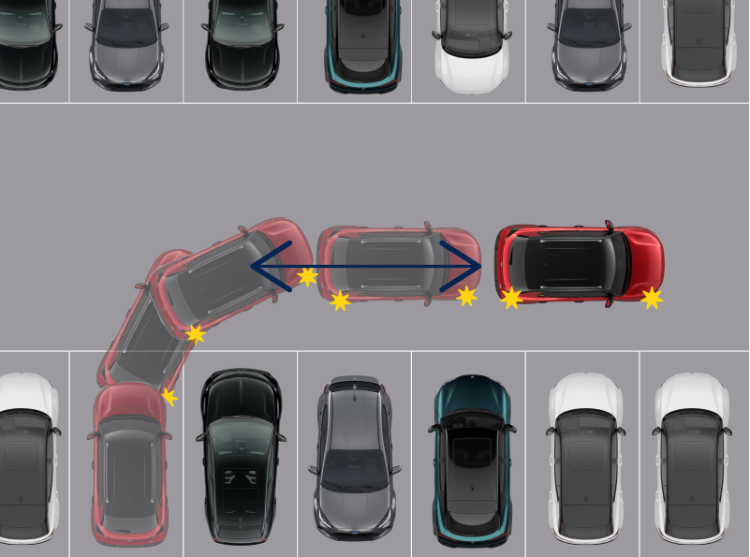
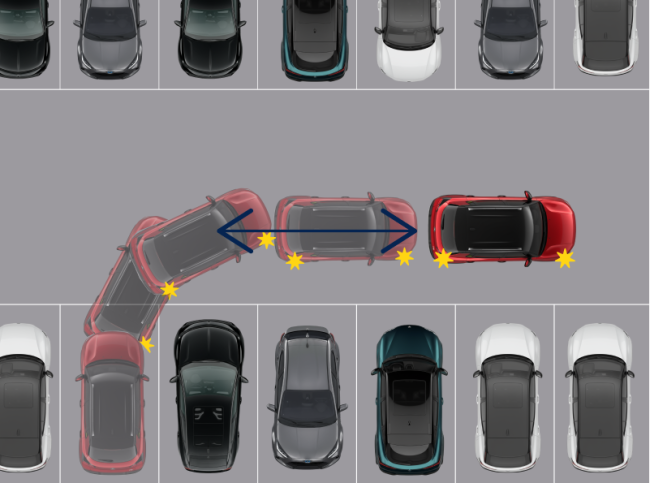
Reversing into a parking space has many advantages: when leaving later, you have a clearer view of the road and more control. Many drivers prefer this method, especially with reversing cameras or parking sensors.
Here’s how:
Indicate right and drive slowly past the parking space.
Keep about 1 metre distance from the row of parked cars.
Check the area: mirrors, shoulder checks, and a quick glance ahead.
Engage reverse gear and begin turning the wheel to the right. A good reference is the car on your left – once your right mirror is level with the middle of that car, start steering.
Reverse slowly into the space, following a curved path. The front of your car will swing slightly left, so check for obstacles.
Once straight, centre the wheels and continue reversing until you’re properly in position.
Adjust if necessary by moving slightly forwards and backwards.
Reverse parallel parking – the ultimate skill
The classic parallel reverse park (along the kerb) is often seen as the hardest – but with the “mirror to mirror” trick, it’s easy.
Step-by-step:
Indicate right.
Check traffic behind and around you.
Stop parallel to the car in front of the empty space – “mirror to mirror” – with about 50 cm gap between the two cars.
Engage reverse gear and start backing up, mainly watching through the rear window while staying aware of oncoming traffic.
When the B-pillar (between front and rear doors) aligns with the rear of the front car, turn the steering wheel fully right. Continue reversing until your car is at roughly a 45° angle to the kerb.
Straighten the wheel and continue reversing until you’re about half a metre from the kerb.
Finally, turn the wheel fully left and reverse gently until you’re straight within the space.
If the distance to the kerb is too large, pull forward slightly and correct.
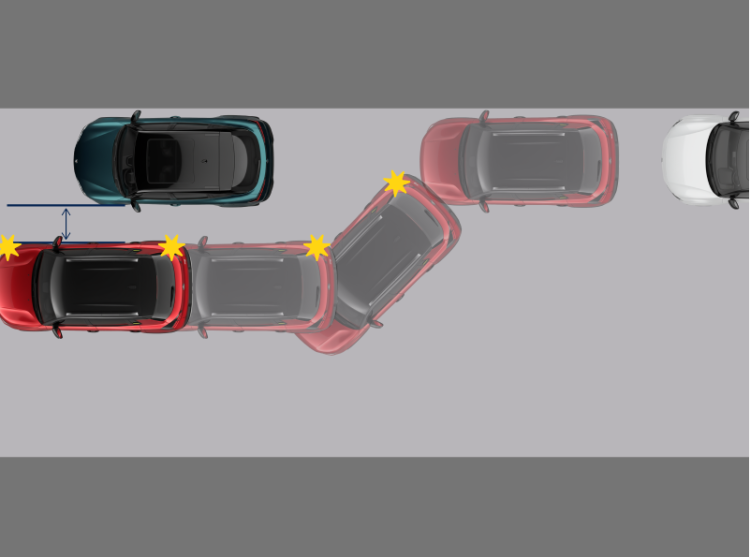
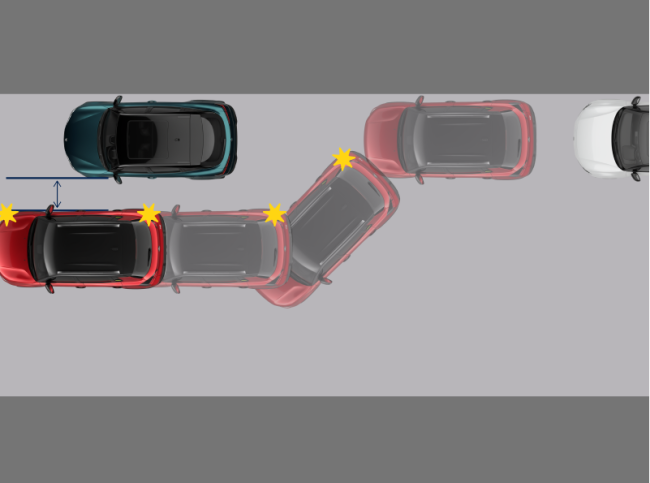
💡 Tip: Parking sensors and cameras make this much easier, but the “mirror to mirror” method always works – even without tech.
2. Public parking, blue, white and yellow zones explained
In Switzerland, parking spaces are colour-coded. The colours show you at a glance where, how long and under what conditions you may park. Rules can vary slightly by municipality – here’s a general overview:
🔵 Blue zone
For: Short-term parking with a parking disc
When: Usually weekdays 8:00–19:00
Duration: Typically 1 hour, sometimes up to 90 minutes
Cost: Free, but time-limited
⚠️ Tip: In some cities (e.g. Zurich or Geneva) evening or Sunday rules differ – always check the sign on site.
⚪️ White zone
For: Paid parking on public land
When: Usually weekdays during the day, evenings and Sundays often free
Cost: Around CHF 1–4 per hour (up to CHF 6 in city centres)
Duration: From 30 minutes to a full day – meters or parking apps (e.g. Parkingpay) show exact details.
🟨 Yellow zone
For: Private parking (companies, tenants, property owners)
Cost: Not public – parking without permission is forbidden
Penalty: Fines of CHF 40–100 or towing possible
3. Car parks & apps: how to find the next free space
Thanks to smart tools, parking is becoming easier. With EasyPark, you can find free spaces, prices and opening hours in real time.
Many cities also have their own online platforms where you can see public car parks – for instance parking.ch.
4. Parking with electric cars – what to know
Electric cars often have their own spaces with charging stations. But note: you may use these only while charging. Once your battery is full, you should move your car.
Many municipalities offer special tariffs – sometimes even free parking while charging. It’s worth checking local rules.
5. Avoiding parking fines: common mistakes
Most common reasons for parking fines:
Forgetting or mis-setting the parking disc
Overstaying the time limit
Parking on private land without permission
Staying too long at charging points
Parking in no-stopping zones or in front of driveways
💡 Tip: Set a timer when parking in a blue zone, or use apps with reminders – it’s an easy way to stay compliant.
6. Conclusion: stress-free parking with Carvolution
Parking can be a pain – but it doesn’t have to be. Knowing the rules and practising a little saves time, money and nerves.
With Carvolution, you’re always relaxed on the road: insurance, servicing and tyres are all included in one monthly price. That means you can focus on the important things in traffic.
👉 Find your ideal car subscription now and drive off stress-free.
Sale
Benefit from attractive discounts on selected vehicles. Everything is included in the subscription, and a buyout is possible at the end!