
- Daytime Running Lights – Great During the Day, Not Enough in Poor Visibility
- Turn Signals – Small but Essential
- Sidelight – Only for When Parked
- Dipped Beams – Your Go-To for Darkness and Poor Conditions
- Main Beams – Greater Visibility at Night, Use with Care
- Fog Lights – Only for Really Poor Visibility
- Automatic Lighting – Convenient but Not Foolproof
- Conclusion
Car lights aren’t just important at night. In fog, rain, snowfall, or tunnels, good visibility – and being visible – is key to your safety on the road. In Switzerland, there are clear rules about when each type of light must be used. Yet many drivers are unsure about which lights are appropriate – or even required – in different situations, and how to switch them on correctly.
Modern cars are equipped with a wide range of lighting systems – from classic dipped beams to intelligent main beam assistants. But technology alone isn’t enough: what really matters is that you know which light to use in which situation – and what you’re better off avoiding.
Because not every light automatically improves visibility – some can even endanger others. To help you stay on top of it all, let’s take a closer look at the most important types of car lights: what they do, when to use them, and how to operate them correctly.
Daytime Running Lights – Great During the Day, Not Enough in Poor Visibility
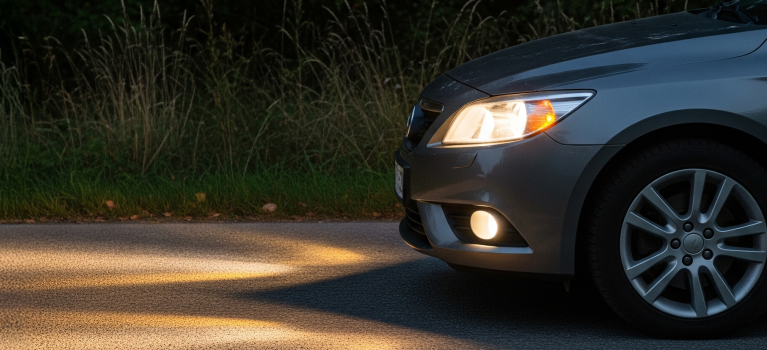
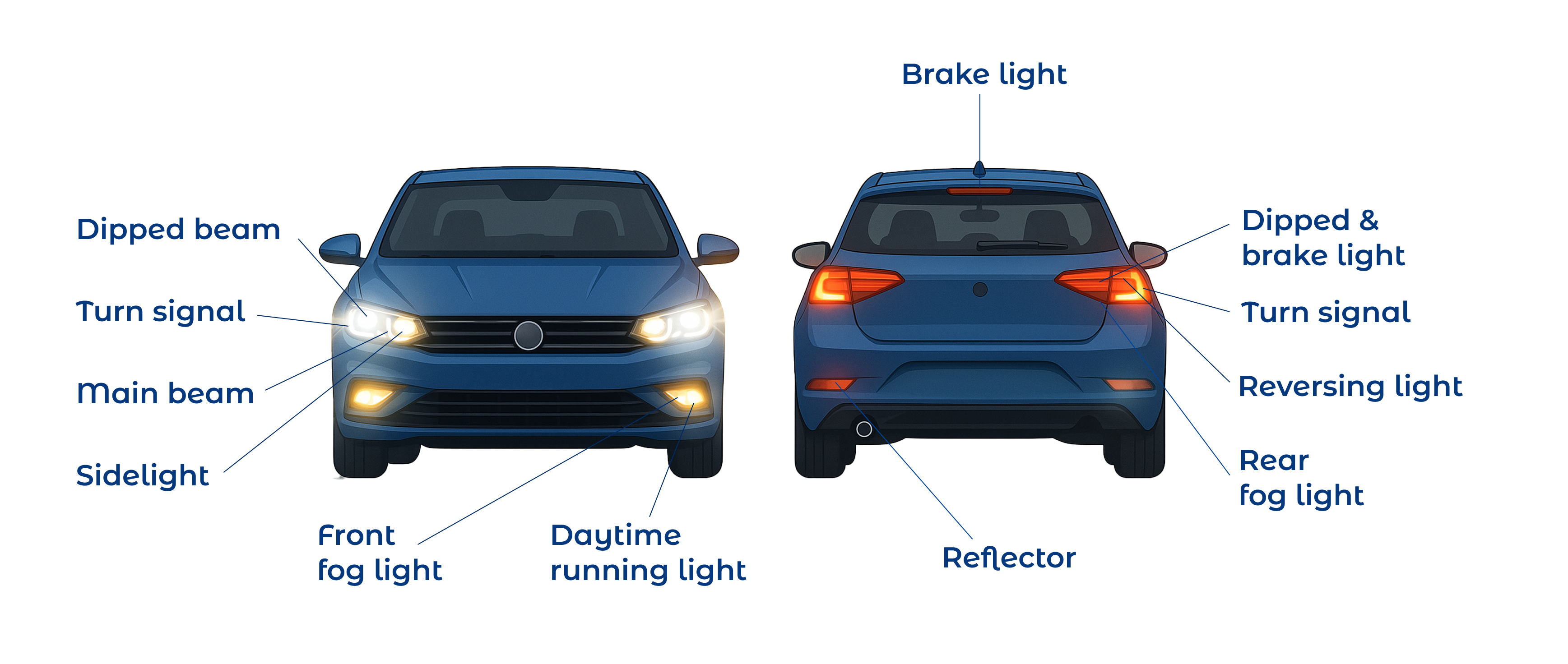
Most modern cars come with daytime running lights (DRLs), which turn on automatically when you start the engine. They make your car more visible during the day but are not a substitute for low beams in poor visibility or tunnels – because DRLs usually only light up the front and not the rear of the car.
Important: In Switzerland, daytime running lights are allowed during the day. But in poor visibility, you must switch to low beams.
Turn Signals – Small but Essential
Turn signals – also called indicators – show others where you're going: when turning, changing lanes, or exiting a roundabout. They’re a simple but crucial communication tool in traffic.
How to activate them: Use the turn signal lever – up for right, down for left.

Sidelight – Only for When Parked
Sidelights (also called position lights) are often confused with low beams but are much weaker. They're designed to make a parked car visible at night or in poor conditions – for example, when parked at the roadside. They are not strong enough for driving and are not allowed for that purpose, as they don’t make you visible early enough to others.
How to switch them on: Usually via the light rotary switch (left of the steering wheel on the dashboard) or the light/turn signal lever.

Dipped Beams – Your Go-To for Darkness and Poor Conditions
Dipped beams are your sidelights for night driving, dusk, and poor visibility. They can always be used – and are mandatory in Switzerland in bad weather or darkness. Most cars now activate dipped beams automatically, but it’s still smart to check manually in tunnels or gloomy conditions.
How to switch them on: Typically via the light rotary switch or the light/turn signal lever.

Main Beams – Greater Visibility at Night, Use with Care
Main beams are mainly used at night on rural roads when there are no cars ahead or in oncoming traffic. They illuminate a much greater distance than dipped beams – but can blind other drivers, so they must be turned off in time.
Many cars, including those available through Carvolution, come with automatic main beam assistants. These systems detect when main beams are appropriate and switch them on or off automatically – so you can stay safe and considerate without having to think about it.
Manual control: In most cars, main beams are activated using the light/turn signal lever.

Fog Lights – Only for Really Poor Visibility
Front fog lights may only be used in fog, heavy snowfall, or rain – when low beams alone don’t provide enough visibility. The rear fog light is very bright and may only be used in dense fog (visibility less than 50 meters) to avoid blinding others.
How to switch them on: Usually via the light rotary switch or the light/turn signal lever.

Automatic Lighting – Convenient but Not Foolproof
Many cars today have automatic lighting. While this feature takes care of a lot for you, it's not always reliable – for example in sudden fog or brightly lit tunnels. That’s why it’s important to understand how your car lighting works – and be ready to act manually when needed.
Conclusion
Lights are more than just a switch – they’re a crucial part of staying safe on the road, for you and for others. If you know when and how to use your car’s lighting, you’ll be driving more safely – in any weather and at any time of day.
Still unsure about car lights – or looking for a car that truly fits your needs? Then book a quick, no-obligation consultation. We’ll give you personal, honest, and expert advice.
Sale
Benefit from attractive discounts on selected vehicles. Everything is included in the subscription, and a buyout is possible at the end!