As soon as the first snow falls, many drivers wonder: do I need snow chains now, or are my winter tyres enough? Here’s what you need to know about when snow chains are truly necessary and how to fit them properly.
When are snow chains compulsory?
There is no general snow chain requirement in Switzerland, but there are situations where you are legally obliged to use them:
If you see the round blue traffic sign with the snow chain symbol, it means snow chains are mandatory on that stretch of road – you are not allowed to continue without them. You’ll most often see this sign on mountain and pass roads or in alpine areas where the gradients are particularly steep.


In addition, according to Art. 31 Para. 1 of the Swiss Road Traffic Act (SVG), you must always remain in control of your car. On steep, snow-covered roads, even winter tyres quickly reach their limits – in such cases, snow chains are highly recommended.
How to fit snow chains – step by step
Before you drive:
Check your car’s manual before using snow chains – some cars have special settings or driving modes for them, and sometimes traction control must be deactivated. It’s also a good idea to practise fitting the chains once in dry conditions. According to the ADAC, this helps you avoid stress and mistakes when it’s snowing.Fit them in good time:
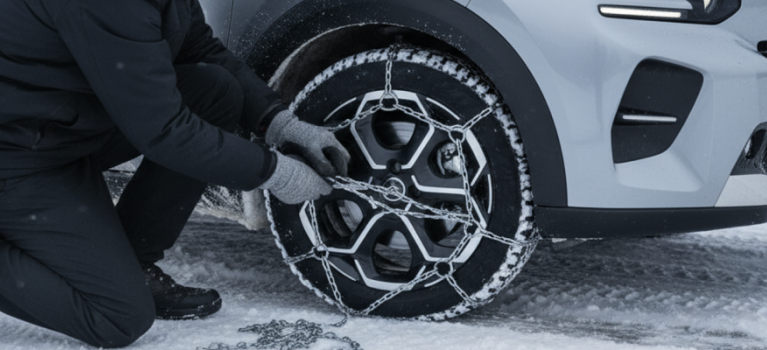
Put the chains on early – ideally on a flat area before driving up a snowy mountain road. Put on a safety vest, switch on your hazard lights, and clear the snow around the tyres.Fitting the chains:
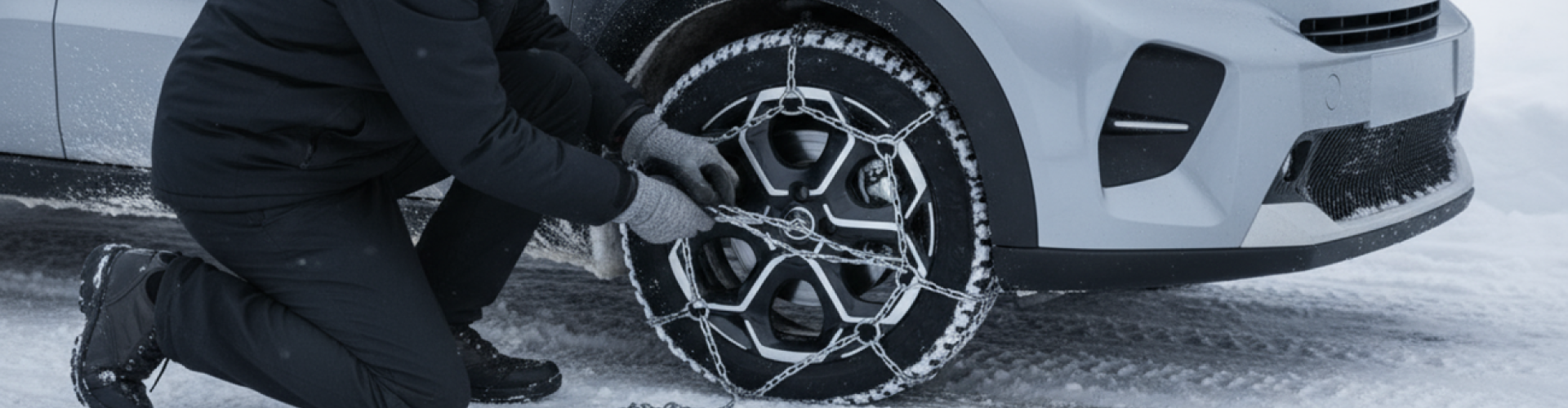
Lay the chain over the tyre following the instructions. Drive forward a few metres so the chain sits properly, then close it and check the tension:
Not too loose: Otherwise it could hit the car and cause damage.
Not too tight: Otherwise it could snap and damage the car as well.
For cars, snow chains must always be fitted to the drive axle. In the case of four-wheel-drive cars, they must be fitted to at least one drive axle and on both wheels of that axle. The car manufacturer’s manual provides details on exactly where to fit them.Check the tension:
After about 100 metres of driving, stop and recheck the tension – the ADAC also recommends this.
How fast can you drive with snow chains?
Most manufacturers – including Michelin – recommend not driving faster than 50 km/h when using snow chains. The reason: this is the only way to ensure both the durability and the safety of the chains.
Alternatives to snow chains
If you only drive occasionally in regions with little snowfall, there are practical alternatives to traditional snow chains. Textile snow chains – also known as snow socks – can be slipped over the tyres quickly, are lighter and quieter, and are gentle on alloy wheels and the road surface. They are particularly suitable for short trips in snowy conditions or as an emergency solution in sudden winter weather.
However, they cannot replace traditional metal snow chains in every situation. On steep mountain roads or in heavy snowfall, metal chains provide much better traction and are often the only approved option. So, if you regularly drive in the mountains, classic metal snow chains remain the safest choice.
Well prepared with Carvolution
When you’re driving a Carvolution car, you can relax: winter and summer tyres are always included, and you’ll automatically receive a reminder when it’s time to switch. The only thing you need to think about yourself are the snow chains.
Sale
Benefit from attractive discounts on selected vehicles. Everything is included in the subscription, and a buyout is possible at the end!