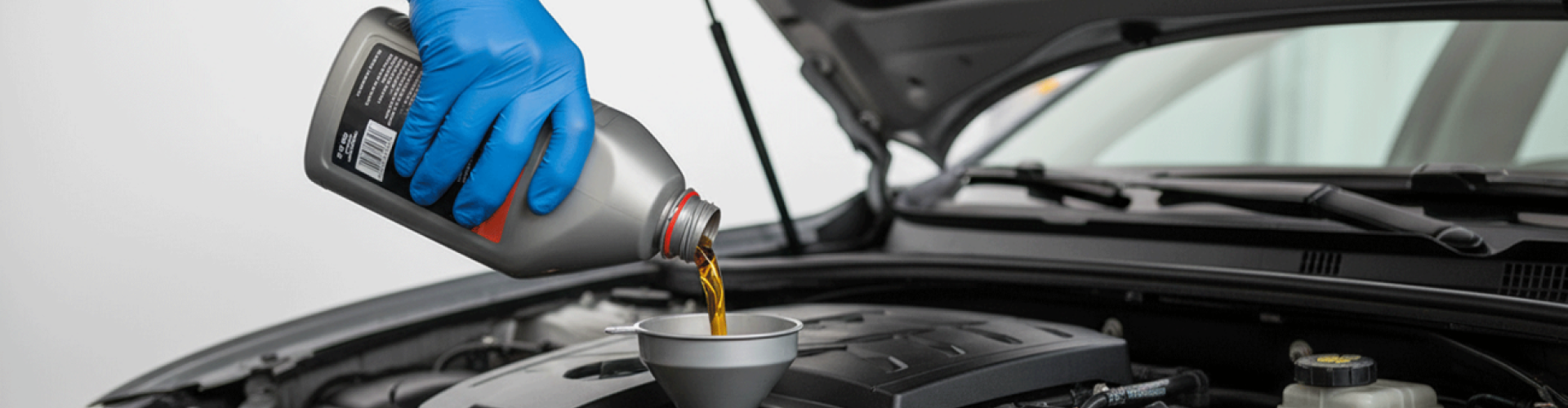
A smooth-running, well-lubricated engine is the heart of every car – and engine oil is its lifeblood. Without sufficient lubrication, expensive engine damage can occur. Yet many drivers aren’t sure when to top up their oil or which type their car actually needs. The good news: checking it only takes a few minutes – and you don’t need a garage.
How do I know when to top up the oil?
1. Warning light on the dashboard
If the yellow or red oil can symbol lights up, it’s a clear warning:
Yellow: The oil level is low – you should top it up soon.
Red: Stop immediately and switch off the engine! There’s a serious risk of engine damage.
2. Check the oil level manually
Even if no light comes on, it’s worth checking regularly – about every few weeks (or every 1,500 km) and before long journeys.
Here’s how:
Park the car on level ground.
Switch off the engine and let it cool for a few minutes.
Pull out the dipstick, wipe it clean, insert it again, then pull it out once more.
- The oil film should be between minimum and maximum.
If it’s close to minimum, top up the oil.
If it’s above maximum, there’s a risk of overfilling – which can also damage the engine.
3. Look out for unusual signs
Even without a warning light, your car may show symptoms that something’s wrong:
Unusual engine noises, like knocking or rattling, can indicate insufficient lubrication.
Blue or grey exhaust smoke means oil is entering the combustion chamber – often a sign of low oil or a mechanical issue.
Oil spots under the car after parking may indicate a leak.
In the worst case, too little oil or worn-out oil can lead to severe engine damage.
💡 Tip: Many modern cars display the oil level digitally on the dashboard. Still, a manual check is always a good idea – sensors can sometimes give inaccurate readings.
Which oil is right for my car?
There’s no one-size-fits-all solution. The correct oil depends on your engine and manufacturer. Check your car handbook or the oil cap for details.
Look for the manufacturer’s specifications and approvals, such as VW 504.00, MB 229.5 or BMW Longlife-04. Only oil that meets these standards will protect your engine properly.
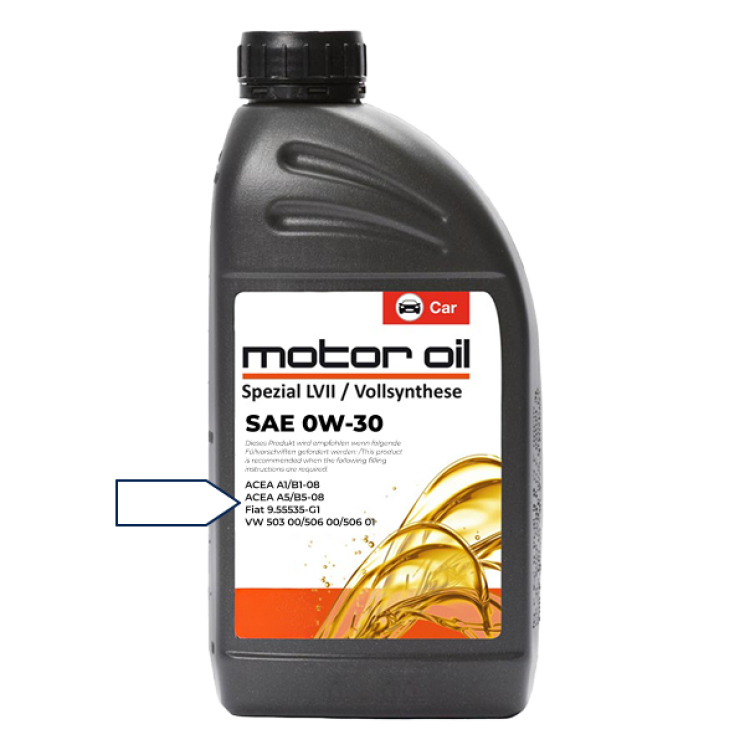
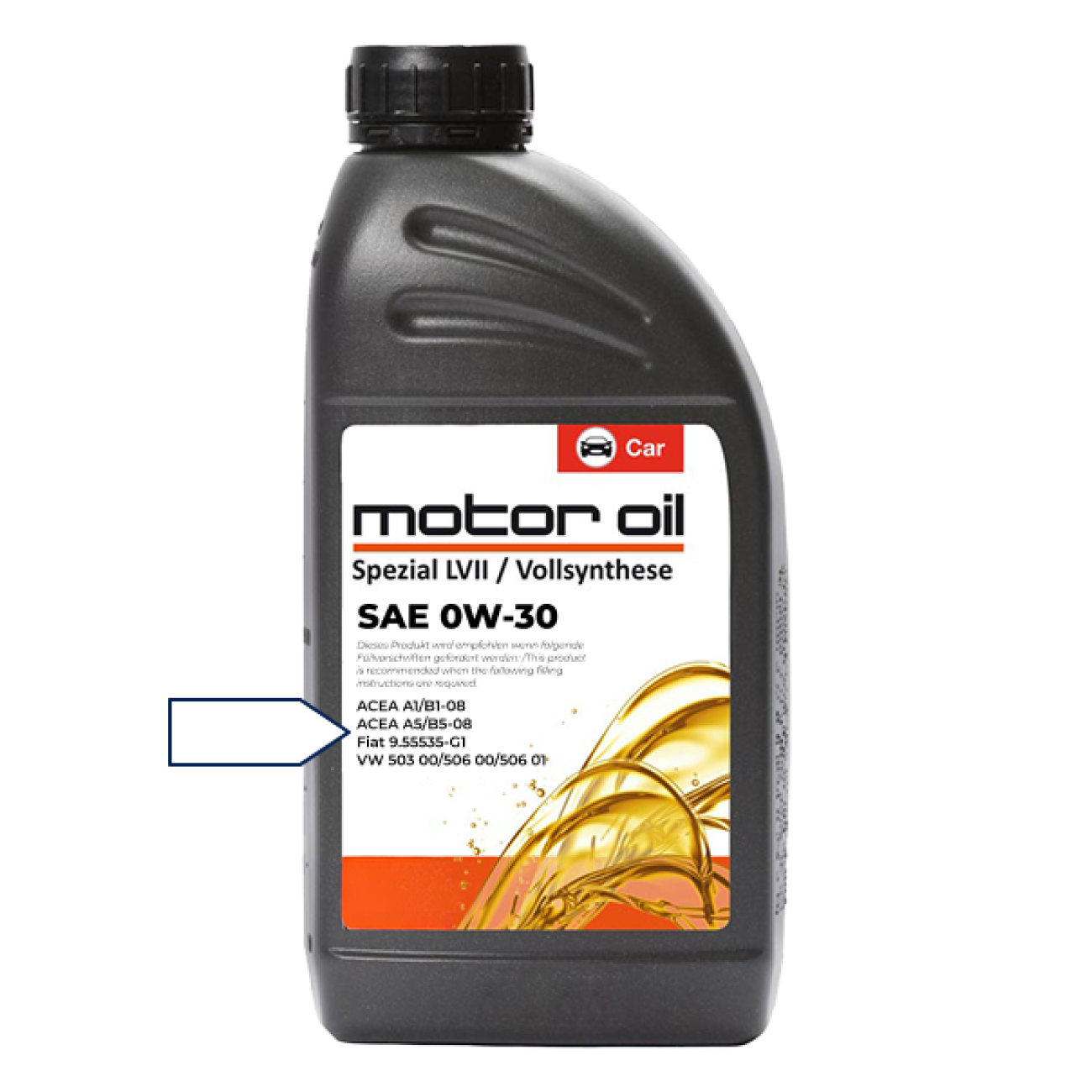
Specifications
💡 Tip: If you’re unsure, you can use your Car Identification Number (VIN) to find the exact oil type – either through your dealer or online.
How to top up correctly
Open the oil cap (usually marked with an oil can symbol).
Add small amounts of oil, wait 1–2 minutes, and check the level again.
Repeat until the oil film sits within the optimal range.
Close the cap tightly and wipe away any spills with a cloth.
❗ Important: Never overfill the oil – too much oil can cause serious engine damage.
When should you change the oil completely?
Even if you top up regularly, oil ages over time and loses its lubricating properties.
Most cars require an oil change every 15,000–30,000 km or once a year.
In modern cars, service intervals are automatically adjusted based on driving conditions. Frequent short trips or long periods of inactivity can shorten these intervals.
Conclusion: Regular checks prevent costly damage
Engine oil is like your car’s blood – without the right amount and quality, serious damage can occur. So check your oil level regularly and always follow the manufacturer’s recommendations.
Yellow oil can? Top up soon.
Red oil can? Stop immediately.
Which oil? Only use the one approved by your manufacturer.
With Carvolution, your service visits are already included – you just need to remember to book your appointment. That way, your car stays in top shape, and you can drive with complete peace of mind.
Sale
Benefit from attractive discounts on selected vehicles. Everything is included in the subscription, and a buyout is possible at the end!