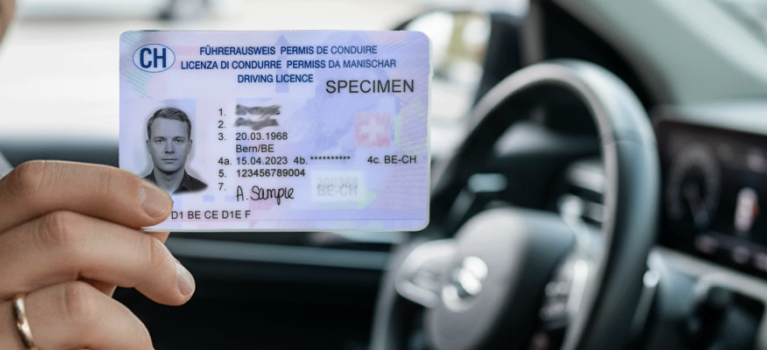
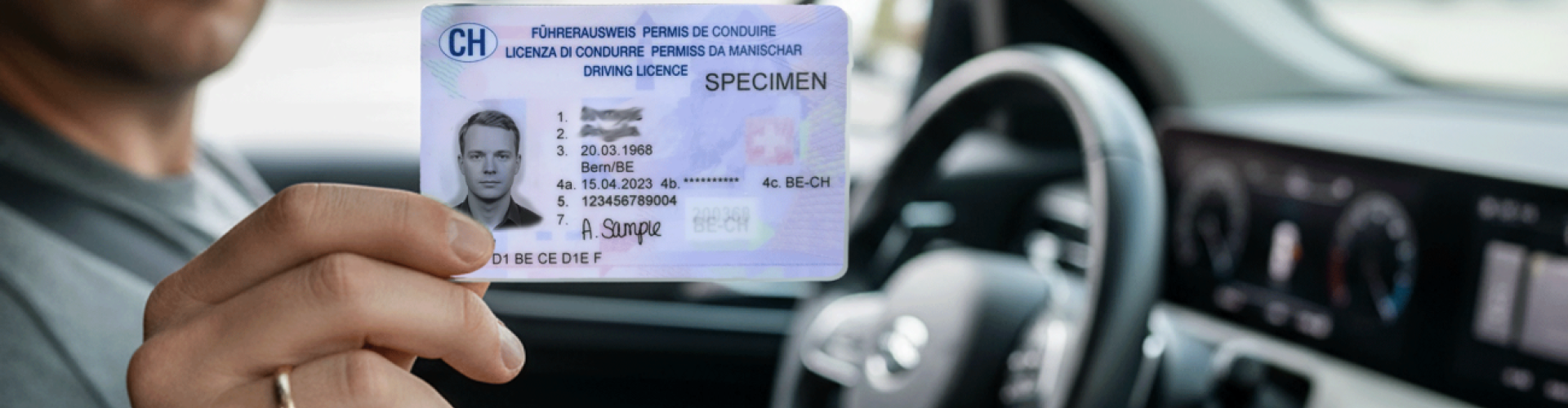
Many people who drive – or have just passed their driving test – wonder: What exactly am I allowed to drive with my licence? Whether it’s a small car or a delivery van, your driving licence clearly states which types of cars you’re permitted to operate. But what do the different categories actually mean? And does it matter what size, engine type or transmission your car has? Here’s everything you need to know – including when you must always have your licence with you.
Driving Licence Categories at a Glance – What Each Class Means
In Switzerland, driving licences are divided into various categories and subcategories. These determine which types of cars you’re legally allowed to drive.


Driving Licence Categories
Category B – The Standard Car Licence
With Category B, you can drive motor cars and three-wheeled cars:
Maximum authorised mass up to 3,500 kg
Up to 9 seats (including the driver)
With manual or automatic transmission
For several years now, you’ve been able to take your test in an automatic car. If you pass the test this way, you’re still allowed to drive manual cars – the old restriction for automatic-only licences no longer applies.
Subcategory B1 – Small cars
With subcategory B1, you can drive small and three-wheeled motor cars (for example, microcars or light quadricycles) with an unladen weight of no more than 670 kg.
Towing Trailers – What’s Allowed?
With a Category B licence, you may:
Tow a light trailer with a maximum authorised mass of up to 750 kg, or
Tow a heavier trailer, provided that the total combined weight of car and trailer does not exceed 3,500 kg.
If you wish to tow larger or heavier trailers – such as a caravan or horsebox – you’ll need Category BE. This allows you to tow trailers over 750 kg, as long as the total combination does not exceed 7,000 kg.
Engine Type & Transmission – Does It Matter for Your Licence?
In general, no – the engine type (gasoline, diesel, electric, hybrid) has no impact on your licence category. What matters is the car’s maximum authorised weight.
When it comes to the transmission:
If you passed your test in an automatic car, you’re now also allowed to drive cars with a manual gearbox (new rule since 2019).
If you still have an older licence with such a restriction, you can have it removed at your local road traffic office. There’s no longer any difference between an automatic and a manual driving test.
Do You Always Have to Carry Your Licence?
Yes – if you’re stopped and can’t show your driving licence, you’ll face a CHF 20 fine. It’s your responsibility as a driver to be roadworthy, follow traffic laws, and carry all required documents at all times.
Tip: Keep your licence in your wallet or in the car so that you’re always covered during roadside checks.
Conclusion: Know What You’re Allowed to Drive
Your driving licence clearly defines which cars you may drive – from small city cars and electric cars to car-trailer combinations.
The category system is straightforward and ensures clear rules on the road.
By understanding the regulations, you’ll drive more safely, avoid fines, and know exactly what your limits are.
One thing’s for sure: with a Category B driving licence, you can enjoy the full range of the Carvolution fleet – from efficient city cars to spacious family cars and fully electric SUVs.
Sale
Benefit from attractive discounts on selected vehicles. Everything is included in the subscription, and a buyout is possible at the end!