Nothing is more frustrating than when your car suddenly stops – whether it’s due to a dead battery or a technical fault. In these situations, it’s important to stay calm and know the right steps: from jump-starting to towing.
1. Safety first
Before doing anything: secure the scene, then act.
Switch on hazard lights – immediately, so other drivers are warned.
Put on a high-visibility vest – if you have one, before getting out, so you’re clearly visible.
Leave the car carefully – preferably on the passenger side.
Set up a warning triangle – at least 50 m behind the car, or 100 m on a motorway.
Use a light signal – if available, especially in darkness or poor visibility.
Switch on the ignition in the broken-down car when towing – so that power steering and brake booster still function.
2. Jump-starting a car
With jump leads
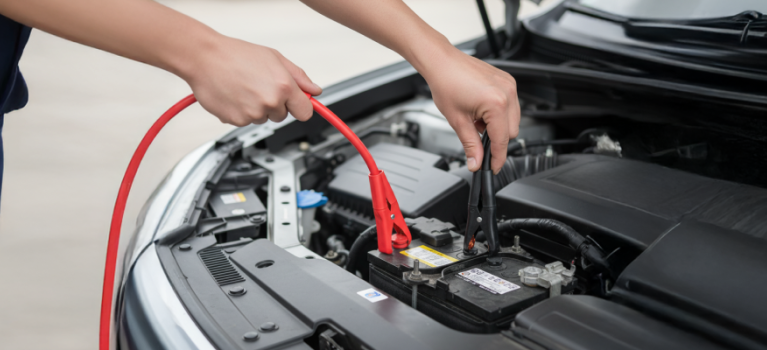
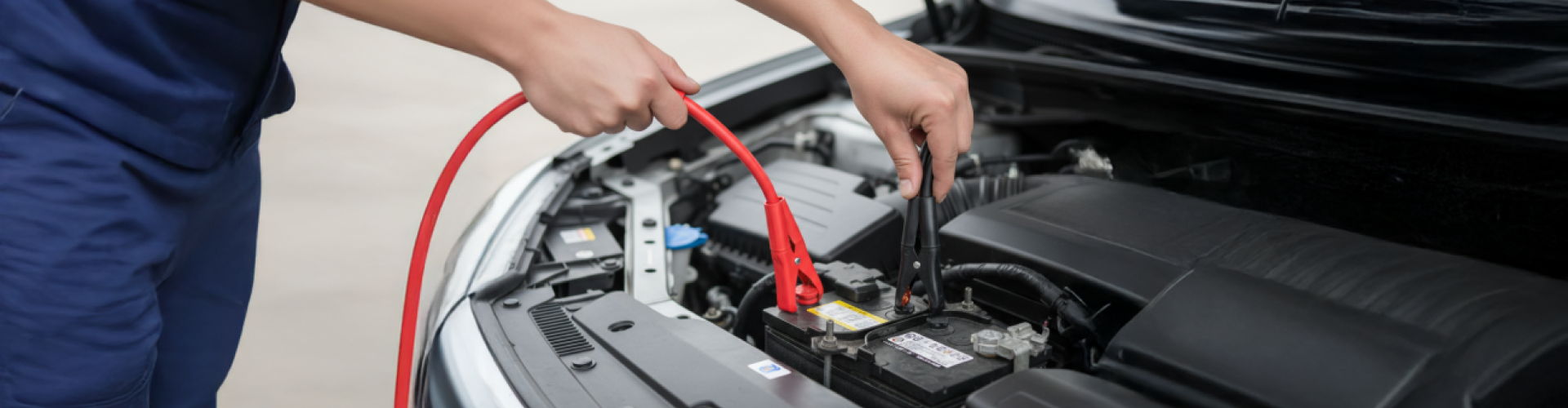
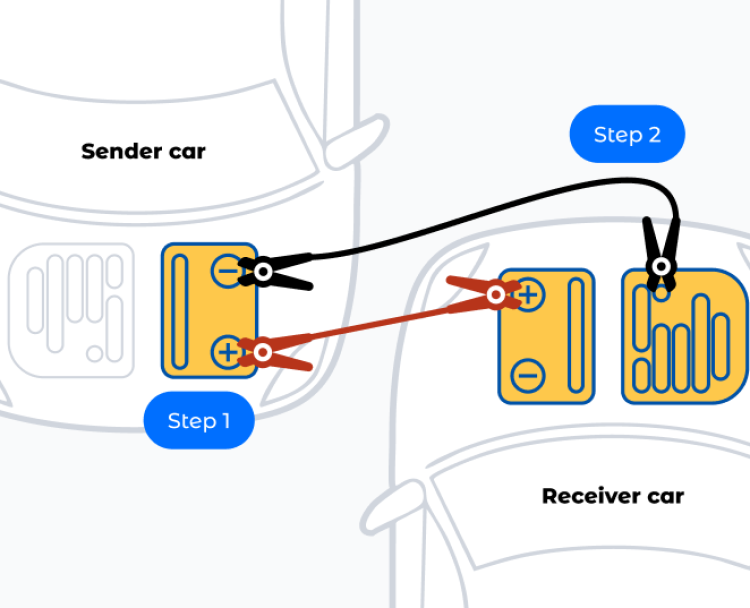
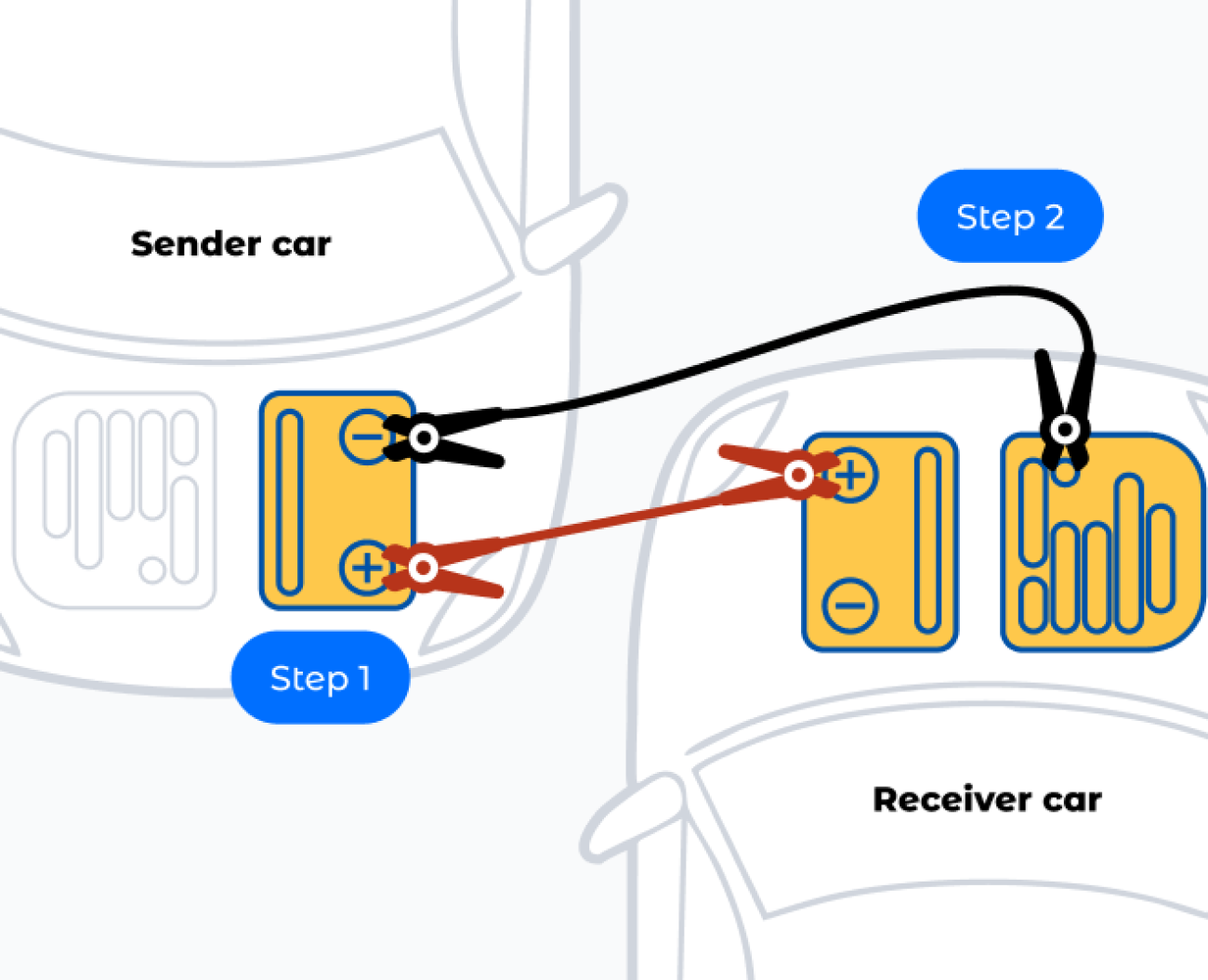
Attach the red clamp to the positive terminal of the dead battery, then to the positive terminal of the charged battery.
Attach the black clamp to the negative terminal of the charged battery, then to an unpainted metal part on the broken-down car (earth/ground).
Start the donor car’s engine, wait briefly, then start the broken-down car. Stop after three failed attempts – otherwise damage may occur.
Remove the clamps in reverse order.
👉 Many modern cars have sensitive electronics. Always check the manual to see if jump-starting is permitted.
With a jump starter
Much more convenient and safer: a portable device replaces the donor car. Connect the clamps to the positive and negative terminals, start – done.
Special cases: hybrid & electric cars
Hybrids:
They also have a small 12-volt battery that powers all electronics. If it fails, the car won’t start. Usually, you can jump-start a hybrid in the same way – but the battery is often located in the boot instead of the engine bay.
Electric cars:
Similar principle – they also have a 12-volt battery for the electronics. Only when it works is the high-voltage battery released. Important: never try to jump-start the high-voltage battery! Whether you can jump-start the small battery depends on the model – so always check the manual. If unsure, call roadside assistance.
With jump leads
3. Towing a car
If jump-starting doesn’t work or a fault is present, towing is often the only option. You generally have two choices: tow it yourself or call the professionals.
Towing it yourself
You’ll need a connection between the cars – either a tow rope or a tow bar. A rope is cheap and easy to store but can cause jerks when pulling away. A bar is sturdier and safer, especially for beginners, but bulkier. Key rules: both cars need a tow point, maximum speed is 40 km/h, and on motorways you may only tow to the next exit or service area. Many automatic or all-wheel-drive cars must not be towed in the normal way – they need a trailer or flatbed truck.
Calling a towing service
If you prefer less stress, leave it to the professionals. With Carvolution’s all-inclusive package, one quick call to Mobi24 Assistance (24/7 on +41 31 389 81 10 or directly via the app) is enough. They’ll arrange everything: transport to the garage and, if necessary, even a replacement car.
Conclusion: When the battery fails – stay calm
A dead battery happens to almost every driver at some point – usually at the worst moment. Then it’s all about staying calm and taking the right steps: secure the scene, try a jump-start, and if that fails, arrange for towing. This way, you stay safe and get back on the road quickly.
Even easier with Carvolution: Mobi24 Assistance organises the towing for you. And since insurance, tax, tyres and servicing are all included in the car subscription, you benefit not only in emergencies but also in everyday life – with less hassle and more peace of mind.
Sale
Benefit from attractive discounts on selected vehicles. Everything is included in the subscription, and a buyout is possible at the end!